
Questo articolo tratta di sostanze psicoattive destinate agli adulti (18+). Consulta un medico se hai condizioni di salute o assumi farmaci. La nostra politica sull'età
How To Make Cannabis Tea
Definition
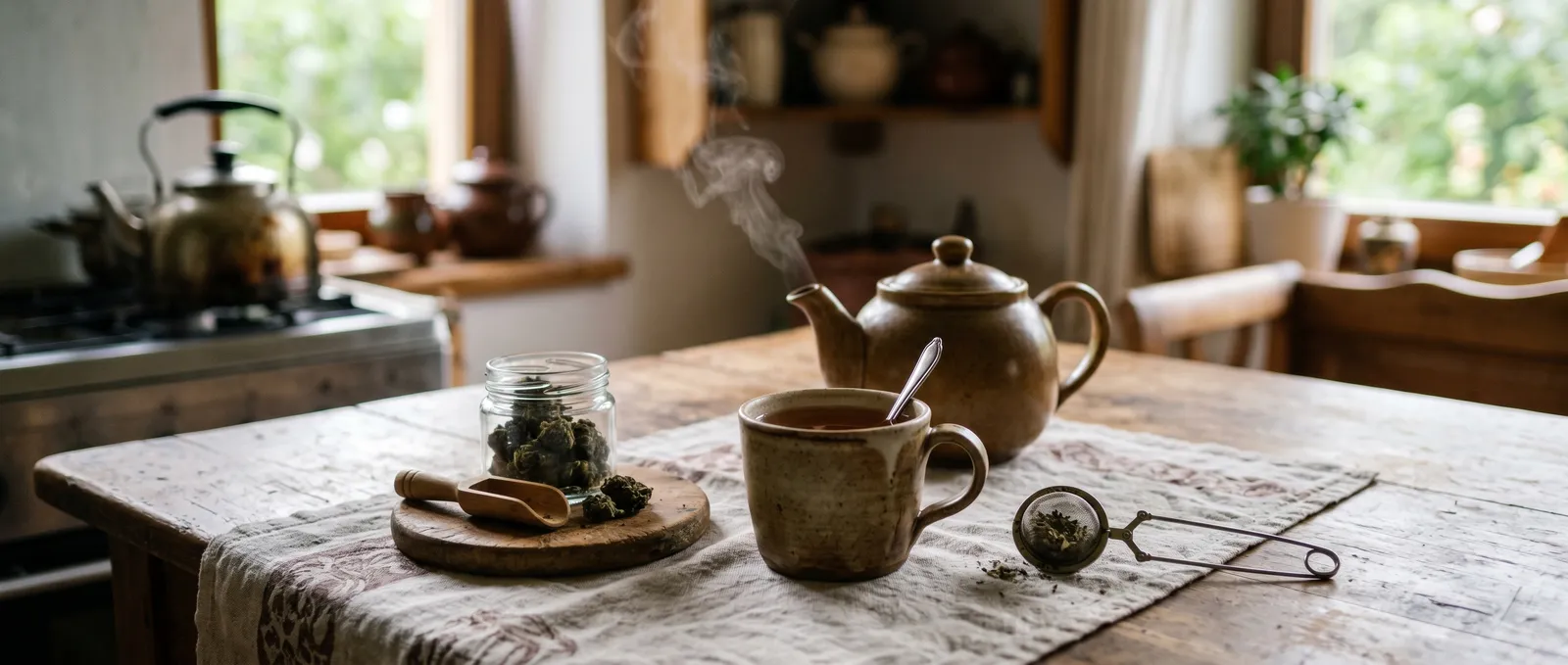
Cannabis tea is an oral preparation that infuses decarboxylated cannabinoids into a hot drink using a fat source for extraction. Because THC and CBD are lipophilic, plain water extracts almost nothing — oral bioavailability of THC sits at just 4–12% even under optimal conditions (Zgair et al., 2016). A proper recipe requires decarboxylation, a fat co-solvent, and patience.
18+ only Cannabis tea is a fat-extracted oral preparation that infuses decarboxylated cannabinoids into a hot beverage for slow, sustained effects. It is one of the oldest methods of oral cannabis consumption — a gentle route that trades the rapid onset of smoking for a longer, more gradual experience. The catch? Cannabinoids like THC and CBD are fat-soluble, not water-soluble, which means dumping ground flower into hot water and hoping for the best will mostly produce a grassy-tasting disappointment. This guide covers the science behind extraction, two distinct cannabis tea preparation methods, dosing arithmetic, and the common mistakes that turn a promising brew into expensive herbal water.
Disclaimer: This article is for informational purposes only. Cannabis is a controlled substance in many jurisdictions. Azarius does not encourage illegal activity. Check your local laws before preparing or consuming cannabis tea. This content is not medical advice — consult a healthcare professional before using cannabinoids, especially if you take prescription medication.
Why cannabis doesn't dissolve in plain water
Plain water extracts almost no active cannabinoids from cannabis plant material. THC and CBD are lipophilic — they bind to fats and alcohols, not water. A 2019 review in the European Journal of Pharmaceutical Sciences found that oral bioavailability of THC sits between 4–12% even under optimal conditions (Zgair et al., 2016). Brewing flower in water alone extracts minimal active compounds. You'll get some terpenes and a bit of THCA (the non-psychoactive precursor), but the bulk of the good stuff stays locked in the plant material.
That's why every functional cannabis tea recipe includes a fat source — butter, coconut oil, whole milk — or uses alcohol as a co-solvent. Without one of these, you're essentially making a terpene infusion. Pleasant-smelling, sure. Effective? Barely.
There's also the question of decarboxylation. Raw cannabis contains THCA and CBDA, which need heat to convert into THC and CBD. Boiling water (100 °C) can partially decarboxylate cannabinoids over time, but it's inefficient compared to oven decarboxylation at 110–120 °C for 30–40 minutes. If you want your cannabis tea to produce noticeable effects, decarbing first is not optional — it's the step that separates a working recipe from a waste of material. The EMCDDA notes that oral cannabis preparations have historically varied enormously in potency precisely because of inconsistent decarboxylation practices.
Step 1: Decarboxylate your cannabis
Decarboxylation converts inactive THCA into psychoactive THC through controlled heat exposure. Preheat your oven to 110 °C. Break your cannabis into pea-sized pieces — no need for a fine grind, which risks losing trichomes to your baking tray. Spread evenly on a parchment-lined tray and bake for 35–40 minutes. The flower should turn from green to a light golden-brown. You'll smell it; the kitchen will be unmistakable for about an hour.
A 2016 study by Wang et al. published in Cannabis and Cannabinoid Research found that maximum THC conversion from THCA occurred at 110 °C over 40 minutes, with degradation into CBN (a sedating but less psychoactive compound) beginning above 150 °C. So keep the temperature low and steady — overshooting doesn't speed things up, it destroys your active compounds.
Let the decarbed material cool completely before the next step. You can store it in an airtight jar for up to a month without significant potency loss.
Step 2: Choose your cannabis tea method — milk simmer or butter infusion
The two most reliable cannabis tea methods are a direct milk simmer for single servings and a cannabutter dissolution for batch preparation. They suit different situations.
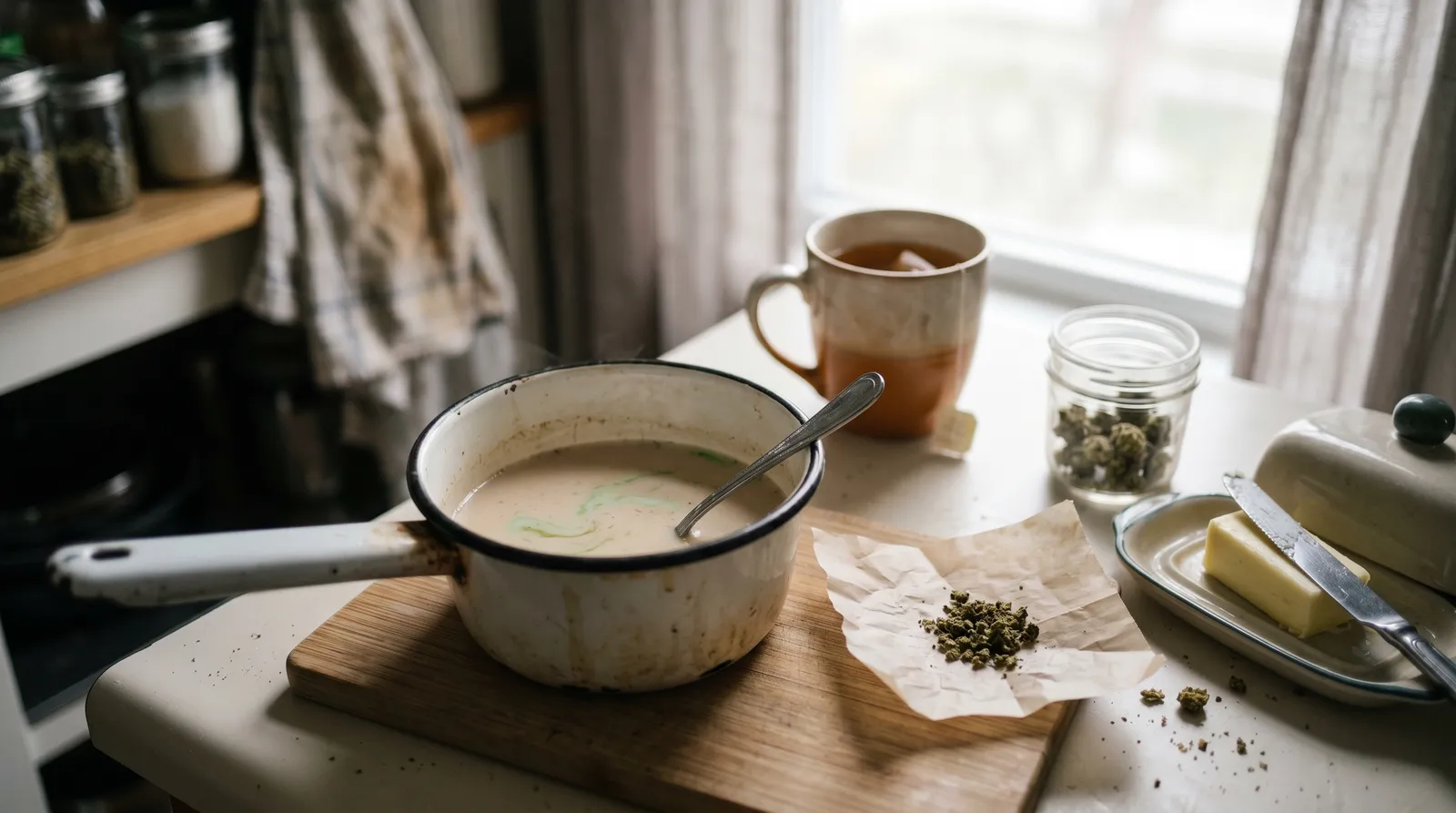
Method A: Milk simmer (single serving, quick)
This is the faster route. Heat 250 ml of full-fat milk (or coconut milk — the higher the fat content, the better the extraction) in a small saucepan over low heat. Add 0.5–1 g of decarboxylated cannabis. Simmer gently for 20–30 minutes, stirring every few minutes. Do not let it boil — scorched milk tastes awful and boiling can degrade cannabinoids.
Strain through a fine mesh sieve or cheesecloth into a mug. Press the plant material to squeeze out the last of the infused milk. Add a tea bag of your choice — chai works particularly well, as the spices mask any residual herbal bitterness — along with honey or sugar to taste.
Method B: Cannabutter tea (batch preparation)
If you already have cannabutter or cannabis-infused coconut oil prepared, this is even simpler. Boil water as you would for any tea. Brew your preferred tea (black tea, rooibos, peppermint — whatever you like). Stir in half a teaspoon to one teaspoon of cannabutter or infused oil. The fat melts into the hot liquid and carries the cannabinoids with it.
This method gives you more control over dosing because you can calculate the potency of your butter in advance and measure precisely. It also means your cannabis tea doesn't taste like simmered plant matter.
Step 3: Do the dosing maths for cannabis tea
A single cup of cannabis tea is an edible, and it follows edible pharmacokinetics — not inhalation kinetics. The onset is slower (45–90 minutes), the peak is later (2–3 hours), and the duration is longer (4–8 hours). Treating it like a joint is a recipe for overconsumption.
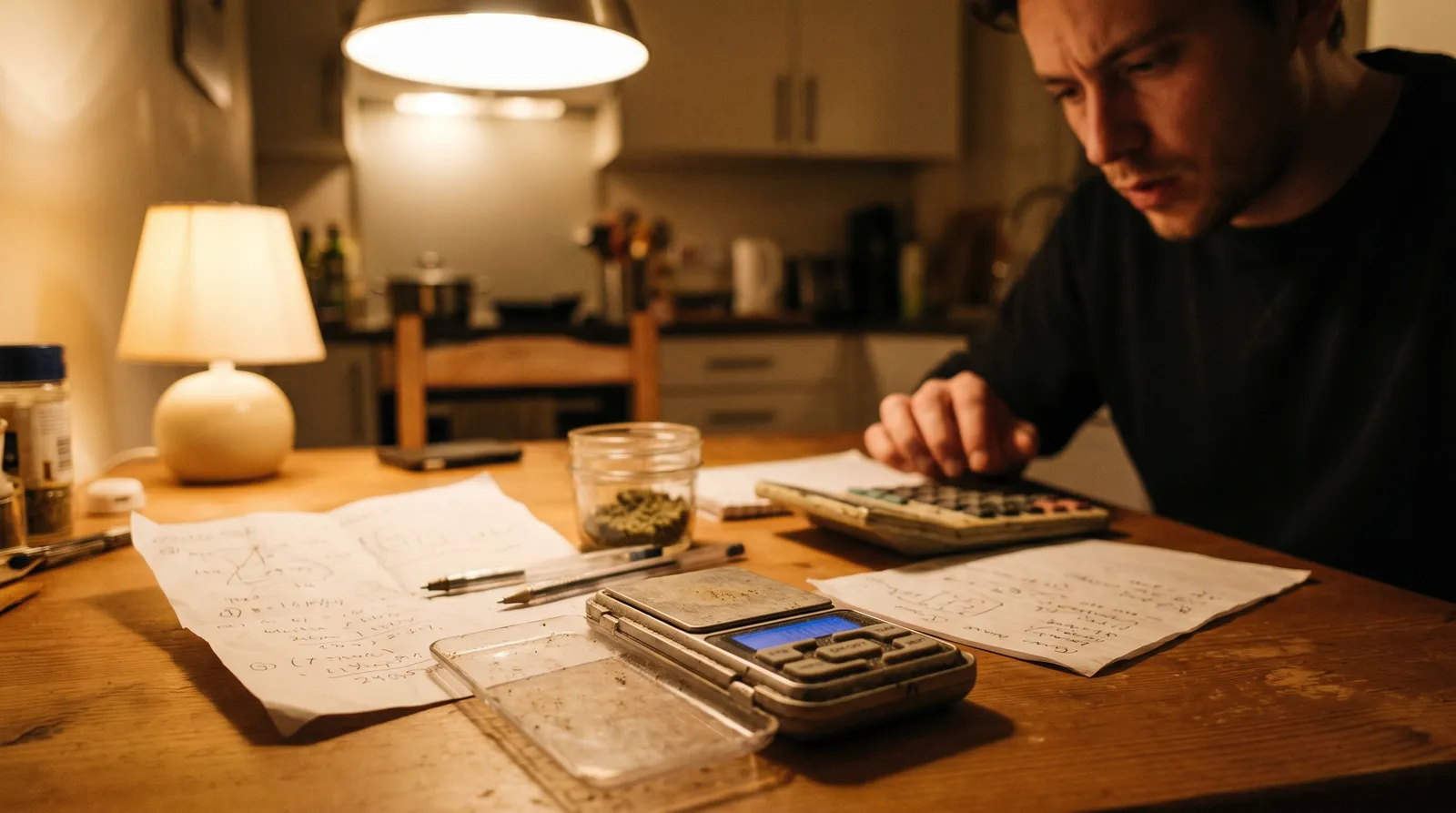
Here's the arithmetic. One gram of flower at 20% THC contains roughly 200 mg of THC. After decarboxylation and extraction losses, expect to retain 60–80% of that — call it 120–160 mg in practice. If you use that full gram in a single cup of milk-simmered cannabis tea, you're looking at a very strong dose. For reference, Health Canada's standard unit for edibles is 10 mg THC, and a 2017 study by Barrus et al. in the Methods Report, RTI Press noted that 5 mg is considered a low oral dose for infrequent users.
| Starting material (1 g at stated %) | Theoretical THC (mg) | Estimated in cup after losses (mg) | Servings at 10 mg each |
|---|---|---|---|
| 10% THC flower | 100 | 60–80 | 6–8 |
| 15% THC flower | 150 | 90–120 | 9–12 |
| 20% THC flower | 200 | 120–160 | 12–16 |
| 25% THC flower | 250 | 150–200 | 15–20 |
The extraction efficiency of a milk simmer is not laboratory-grade — real-world recovery varies between 40% and 70% depending on fat content, temperature, and simmer time. The numbers above assume a reasonably efficient extraction, but treat them as estimates, not guarantees. If you're new to edibles, start with 0.25 g of flower per cup and wait at least two hours before deciding whether you want more.
Two of our staff tested the same batch of cannabutter tea side by side — one in whole milk, one in oat milk. The whole-milk version kicked in about 20 minutes faster and felt noticeably stronger. Oat milk has roughly 1–2% fat versus whole milk's 3.5%. That difference matters more than people expect.
Step 4: Steep, strain, and flavour your cannabis tea
Straining is the step that separates a drinkable cannabis tea from a gritty mouthful of soggy plant matter. Once your cannabinoid-infused liquid is ready, strain out all plant material thoroughly. A coffee filter inside a sieve catches even the fine particles.
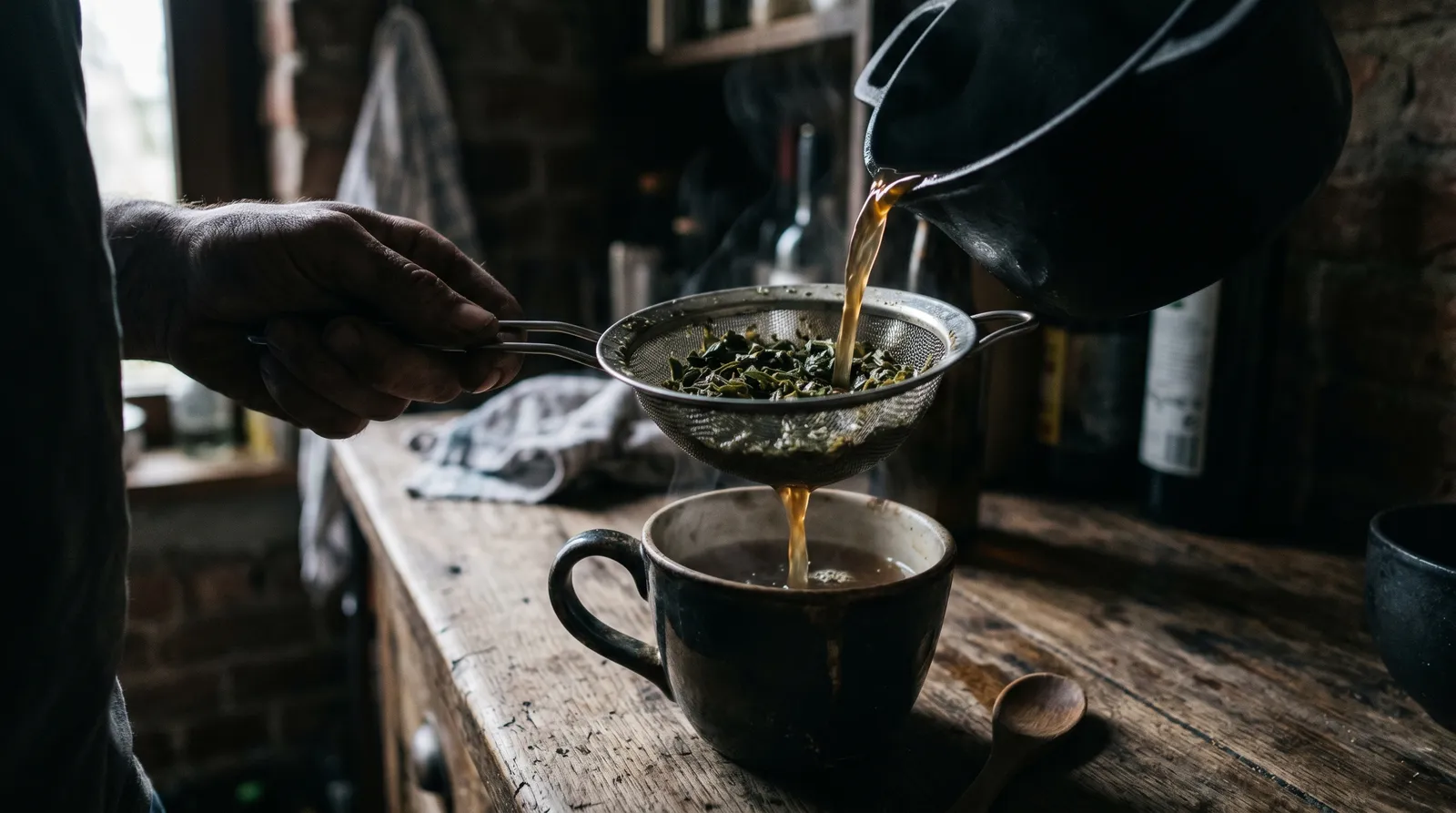
For flavour, think about what pairs well with the earthy, slightly bitter base:
- Chai spices — cinnamon, cardamom, cloves, black pepper. The piperine in black pepper may also improve cannabinoid absorption (Kesarwani & Gupta, 2013).
- Fresh ginger and honey — cuts bitterness and adds warmth.
- Peppermint — clean and bright, good for masking the green taste.
- Cacao powder — turns it into a cannabis hot chocolate. Add a pinch of salt.
Avoid adding citrus juice directly to milk-based versions — it'll curdle. A squeeze of lemon works fine in butter-and-water preparations.
Step 5: Wait. Then wait some more
Oral cannabinoids take 45–90 minutes to produce noticeable effects. They pass through the digestive system and undergo first-pass metabolism in the liver, where THC converts to 11-hydroxy-THC — a metabolite that crosses the blood-brain barrier more readily than inhaled THC (Huestis, 2007). This is why edibles feel different from smoking: the effects are often described as more body-focused and longer-lasting.
Typical onset: 45–90 minutes. Peak effects: 2–3 hours. Total duration: 4–8 hours, sometimes longer with higher doses. The single most common mistake with cannabis tea — and edibles generally — is redosing too early. If you don't feel anything after an hour, the answer is almost always patience, not another cup.
Cannabis tea vs. smoking vs. tinctures
Cannabis tea occupies a middle ground between faster and slower consumption methods. Compared to smoking or vaporising, the onset is much slower (45–90 minutes versus 5–15 minutes) but the duration is roughly double. Compared to alcohol-based cannabis tinctures, tea is gentler on the stomach and easier to flavour, but tinctures offer faster sublingual absorption (15–30 minutes) and more precise dosing. The honest limitation of cannabis tea is consistency — without lab equipment, your actual dose will always be an educated estimate rather than a precise figure. If you need exact milligram dosing for medical purposes, commercially produced edibles or tinctures are the more reliable choice.
We've had customers tell us they switched from smoking to cannabis tea specifically for the longer duration — one person described it as "four hours of gentle warmth instead of one hour of intensity." That tracks with the pharmacokinetics. It's a different tool for a different purpose, not a direct replacement.
Common mistakes and how to avoid them
Most failed cannabis tea attempts come down to one of five errors. Here's what goes wrong and how to fix it.
- Skipping decarboxylation. Raw cannabis tea will contain THCA, which is non-intoxicating. If you specifically want a THCA tea (some people do, for its potential anti-inflammatory properties — see Rock et al., 2013), then skip decarbing intentionally. Otherwise, always decarb first.
- Using water alone. No fat = no meaningful extraction of THC or CBD. Even a tablespoon of coconut oil stirred into the water makes a significant difference.
- Boiling the milk. Keep it at a gentle simmer. Boiling degrades cannabinoids and makes the milk taste scorched.
- Grinding too fine. A powder passes through most strainers and makes the tea gritty. Coarse-break the flower, nothing finer.
- Eyeballing the dose. Do the maths. A gram of strong flower in one cup is not a beginner dose — it's potentially a 12-hour ordeal.
What to buy for cannabis tea preparation
Getting the right accessories makes a noticeable difference in extraction quality and convenience. If you want to buy a proper fine-mesh herb strainer, look for stainless steel tea infusers with a tight weave — the standard ball-style tea infusers let too much plant material through. A kitchen thermometer is worth the small investment to keep your simmer temperature consistent. For those who prefer the cannabutter method, you can buy coconut oil with a high MCT content, which extracts cannabinoids more efficiently than refined versions. Cheesecloth or reusable nut milk bags work well for straining. To order your preparation supplies, check the Azarius accessories and smart shop categories for herb grinders, storage jars, and related tools. You can also get digital scales from the Azarius vaporizer accessories range — accurate weighing is essential for consistent cannabis tea dosing.
One thing we've learned from years behind the counter: people underestimate how much a decent kitchen thermometer improves their cannabis tea. A colleague used to eyeball the milk temperature and got wildly inconsistent results — sometimes nothing, sometimes too strong. A simple probe thermometer keeping the simmer at 80–85 °C made every batch reliable. It's a small buy that pays for itself in wasted flower you don't throw away.
THCA tea: the non-psychoactive option
THCA tea is a non-intoxicating herbal infusion made by deliberately skipping decarboxylation and fat. Simply steep raw, fresh cannabis flower in hot (not boiling) water for 5–10 minutes. You'll extract terpenes, flavonoids, and a small amount of THCA. Rock et al. (2013) found that THCA showed anti-nausea effects in animal models, though human clinical data remains limited. The Beckley Foundation has also highlighted the need for more rigorous clinical research into non-psychoactive cannabinoid preparations, noting that traditional use far outpaces scientific understanding.
This produces a mild, herbal-tasting tea with no intoxicating effects. Think of it as a cannabis herbal infusion rather than an edible.
Onset, duration, and what to expect from cannabis tea
Cannabis tea follows the same pharmacokinetic profile as other edibles. According to Huestis (2007), oral THC reaches peak plasma concentration in 1–3 hours, with effects persisting for 4–8 hours depending on dose and individual metabolism. The experience tends to be gentler in onset and more sustained than smoking — less of a sharp peak, more of a long plateau.
Factors that affect onset and intensity:
- Stomach contents. An empty stomach means faster absorption. A full meal can delay onset by 30–60 minutes but may also increase total absorption of fat-soluble cannabinoids.
- Fat content of the tea. Higher fat = better extraction = stronger effects.
- Individual metabolism. CYP2C9 and CYP3A4 enzymes metabolise THC, and genetic variation in these enzymes means the same dose can affect two people quite differently.
- Tolerance. Regular users will need proportionally more.
For safety information on combining cannabinoids with medications — particularly SSRIs, benzodiazepines, or blood thinners — see the dedicated cannabis interactions article on the Azarius wiki.
Cannabis tea compared to edibles and capsules
Cannabis tea delivers cannabinoids through the same oral route as brownies, gummies, or capsules, but the experience differs in a few practical ways. Liquid preparations tend to absorb slightly faster than solid edibles because the stomach doesn't need to break down a food matrix first — expect onset 10–20 minutes sooner than a dense brownie. However, the total THC absorbed is generally lower with cannabis tea because extraction efficiency in a home kitchen doesn't match commercial edible production. The EMCDDA's 2018 overview of cannabis preparations notes that homemade oral products show the widest potency variation of any consumption method, which is why starting low and titrating up matters more with cannabis tea than with a lab-tested gummy bearing a precise milligram label.
Storage
Cannabis tea doesn't keep well. The milk-based version should be consumed the same day or refrigerated and used within 48 hours. Cannabutter, however, stores for up to two months in the fridge or six months frozen, making it the more practical option if you want a cup on demand without the 30-minute simmer each time.
Decarboxylated flower keeps for about a month in an airtight glass jar stored in a cool, dark place. Potency degrades gradually as THC oxidises to CBN — you won't lose everything overnight, but don't decarb a year's supply.
Last updated: April 2026
Domande frequenti
8 domandeDoes cannabis tea get you high?
How long does cannabis tea take to kick in?
Can you make cannabis tea with stems?
Why does my cannabis tea taste bad but have no effect?
How much cannabis should I use per cup of tea?
Can I buy pre-made cannabis tea?
What fat source works best for cannabis tea?
Why is decarboxylation necessary before making cannabis tea?
Informazioni su questo articolo


Joshua Askew serves as Editorial Director for Azarius wiki content. He is Managing Director at Yuqo, a content agency specialising in cannabis, psychedelics and ethnobotanical editorial work across multiple languages. Th
Questo articolo wiki è stato redatto con l’assistenza dell’IA e revisionato da Joshua Askew, Managing Director at Yuqo. Supervisione editoriale di Adam Parsons.
Avviso medico. Questi contenuti hanno finalità esclusivamente informative e non costituiscono un parere medico. Consulta un operatore sanitario qualificato prima di utilizzare qualsiasi sostanza.
Ultima revisione 19 aprile 2026
References
- [1]Barrus, D. G., et al. (2016). Tasty THC: Promises and challenges of cannabis edibles. Methods Report, RTI Press.
- [2]Beckley Foundation (2020). The case for cannabinoid research: Bridging traditional use and clinical evidence.
- [3]EMCDDA (2018). Cannabis legislation in Europe: An overview. European Monitoring Centre for Drugs and Drug Addiction.
- [4]Huestis, M. A. (2007). Human cannabinoid pharmacokinetics. Chemistry & Biodiversity, 4(8), 1770–1804.
- [5]Kesarwani, K., & Gupta, R. (2013). Bioavailability enhancers of herbal origin. Asian Pacific Journal of Tropical Biomedicine, 3(4), 253–266.
- [6]Rock, E. M., et al. (2013). Tetrahydrocannabinolic acid reduces nausea-induced conditioned gaping in rats. British Journal of Pharmacology, 169(3), 685–694.
- [7]Wang, M., et al. (2016). Decarboxylation study of acidic cannabinoids. Cannabis and Cannabinoid Research, 1(1), 262–271.
- [8]Zgair, A., et al. (2016). Dietary fats and pharmaceutical lipid excipients increase systemic exposure to orally administered cannabis. European Journal of Pharmaceutical Sciences, 93, 442–452.