
Questo articolo tratta di sostanze psicoattive destinate agli adulti (18+). Consulta un medico se hai condizioni di salute o assumi farmaci. La nostra politica sull'età
How to Make THC Gummies: Step-by-Step Science Guide
Definition
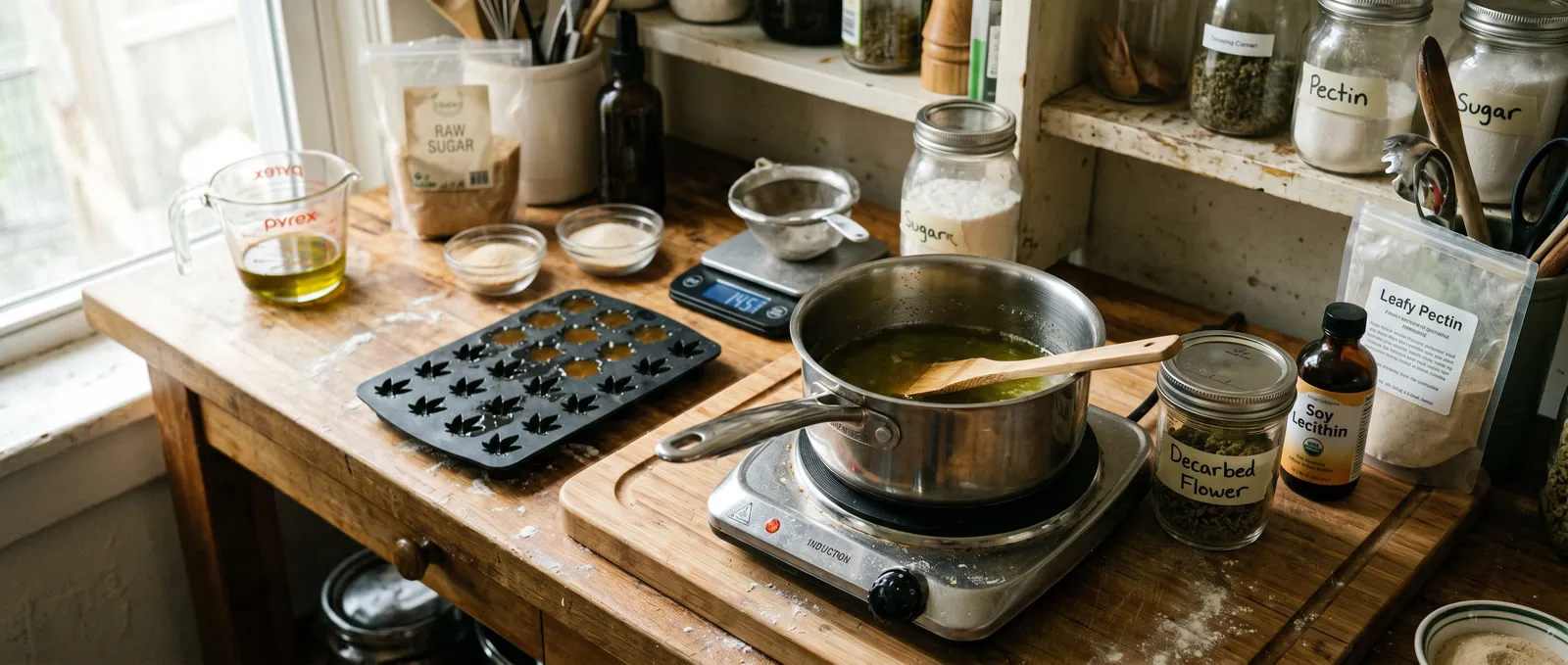
How to Make THC Gummies is a three-step culinary process — decarboxylating flower, infusing it into a fat carrier, then emulsifying that fat into gelatine or pectin sweets — producing oral edibles metabolised into 11-hydroxy-THC, with onset at 1–3 hours and effects lasting 4–8 hours (Huestis, 2007).
Making THC gummies at home: the short version
How to make THC gummies is a three-step kitchen process: decarboxylating raw flower to activate THC, infusing it into a fat carrier, then emulsifying that fat into a gelatine or pectin sweet so each piece carries roughly the same dose. THC gummies are an oral cannabis edible that delivers cannabinoids through hepatic metabolism rather than inhalation, producing a slower-onset, longer-lasting effect than smoked or vaped flower. This guide is written for adults aged 18 and over — effects and dosing ranges below apply to adult physiology. Skip any of the three steps and you'll end up with weak, greasy, or wildly uneven gummies. 18+ only
Key facts
- Active compound: Δ9-THC, a partial agonist at CB1 and CB2 receptors (Pertwee, 2008). Raw flower contains THCA, which is non-intoxicating until decarboxylated at 100–120°C.
- Onset: Oral THC peaks at 1–3 hours; effects last 4–8 hours (Huestis, 2007). Significantly slower than inhalation.
- First-pass metabolism: Oral THC is converted in the liver to 11-hydroxy-THC, a metabolite that is more potent and longer-acting than inhaled THC (Lemberger et al., 1972).
- Starting dose in published literature: 2.5–5 mg per gummy for edible-naïve adults (MacCallum & Russo, 2018).
- Shelf life: Gelatine gummies last 2–3 weeks refrigerated; pectin versions slightly longer. Cannabinoid potency degrades with light, heat, and oxygen.
- Forms: Can be made with infused coconut/MCT oil, cannabutter, RSO, or commercial tinctures — each with different dosing math.
Commercial disclosure
Azarius sells cannabis-adjacent products (CBD, seeds, accessories) and has a commercial interest in this topic. Our editorial process includes independent pharmacological review to mitigate commercial bias. This article explains the chemistry and technique; it is not a sales page.
Who should not make or consume THC gummies
Published contraindications for oral THC include pregnancy and breastfeeding (Volkow et al., 2017, NEJM), personal or family history of psychosis or schizophrenia (Di Forti et al., 2019), severe cardiovascular disease (Harvard Health, 2024, on edibles and cardiac events), and concurrent use of CNS depressants, SSRIs, MAOIs, or CYP3A4/CYP2C9 inhibitors such as clarithromycin or fluconazole (Alsherbiny & Li, 2019). Do not drive or operate machinery after consumption — impairment can last 6+ hours with edibles. THC also interacts with warfarin by elevating INR (Damkier et al., 2019).
A quick history of cannabis edibles
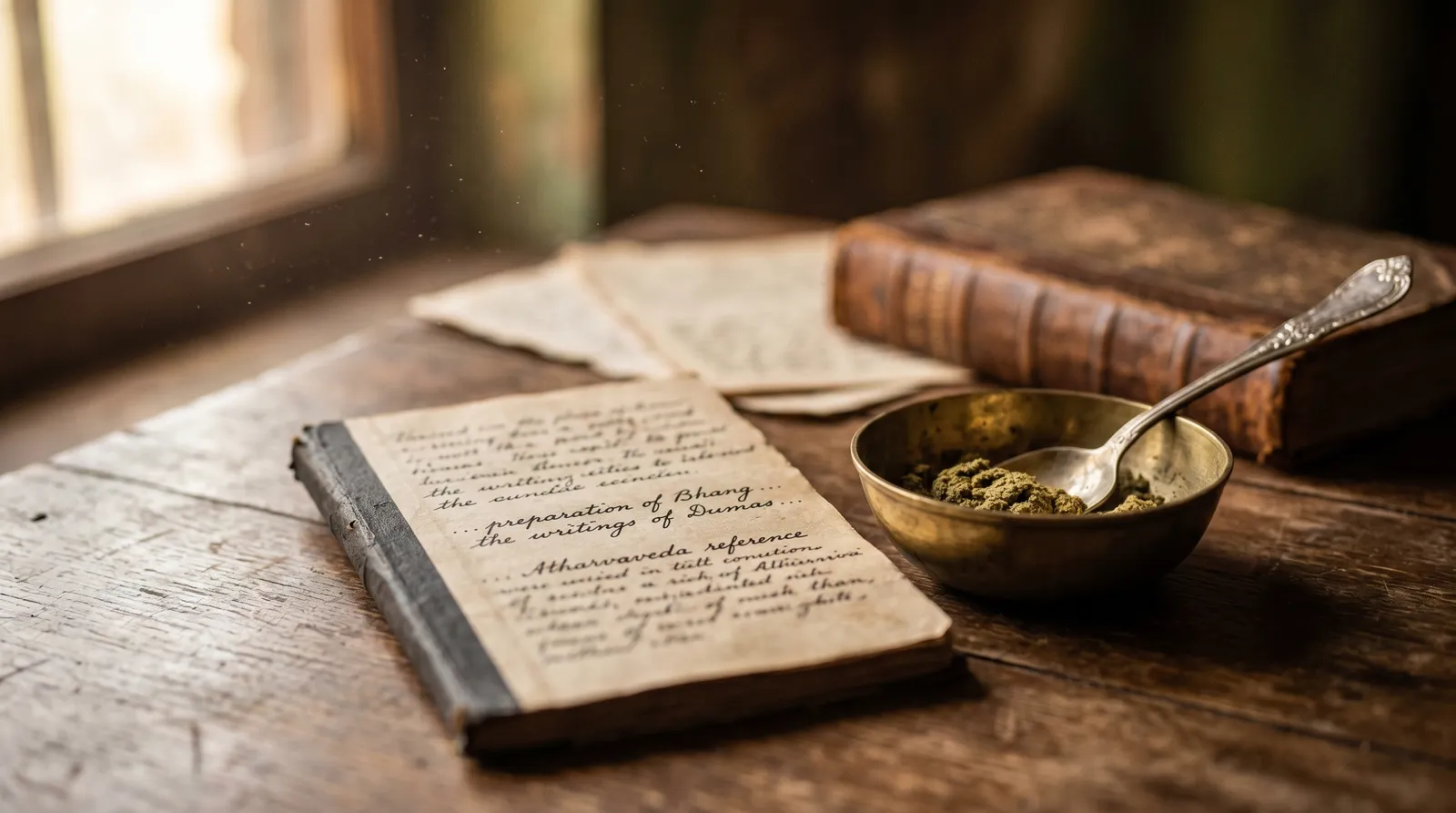
Cannabis-infused food is ancient. The earliest written reference is in the Atharvaveda (c. 1500 BCE), where bhang — a cannabis-milk preparation — features in Hindu ritual. Dumas' The Count of Monte Cristo (1844) describes hashish jam, likely based on the Parisian Club des Hashischins that Baudelaire and Gautier attended in the 1840s. Alice B. Toklas' 1954 cookbook introduced "Haschich Fudge" to Anglophone kitchens, though the recipe was contributed by Brion Gysin and the Toklas herself reportedly never made it.
Gummies are newer. Raphael Mechoulam isolated and synthesised Δ9-THC in 1964 at the Weizmann Institute, which finally let researchers quantify doses. Commercial THC gummies emerged from Colorado and Washington dispensaries after 2014 legalisation, and the format exploded because it's discreet, portion-controlled, and doesn't taste of burnt plant. Home recipes followed the same logic: if you can make jelly babies, you can make this.
Two staff members disagree on gelatine versus pectin. One swears gelatine gives a cleaner chew and holds dose better; the other (vegetarian) argues pectin sets firmer and doesn't melt in a warm pocket. Both are right — the pectin versions genuinely survive a summer bike ride; the gelatine ones don't.
The chemistry you actually need to understand
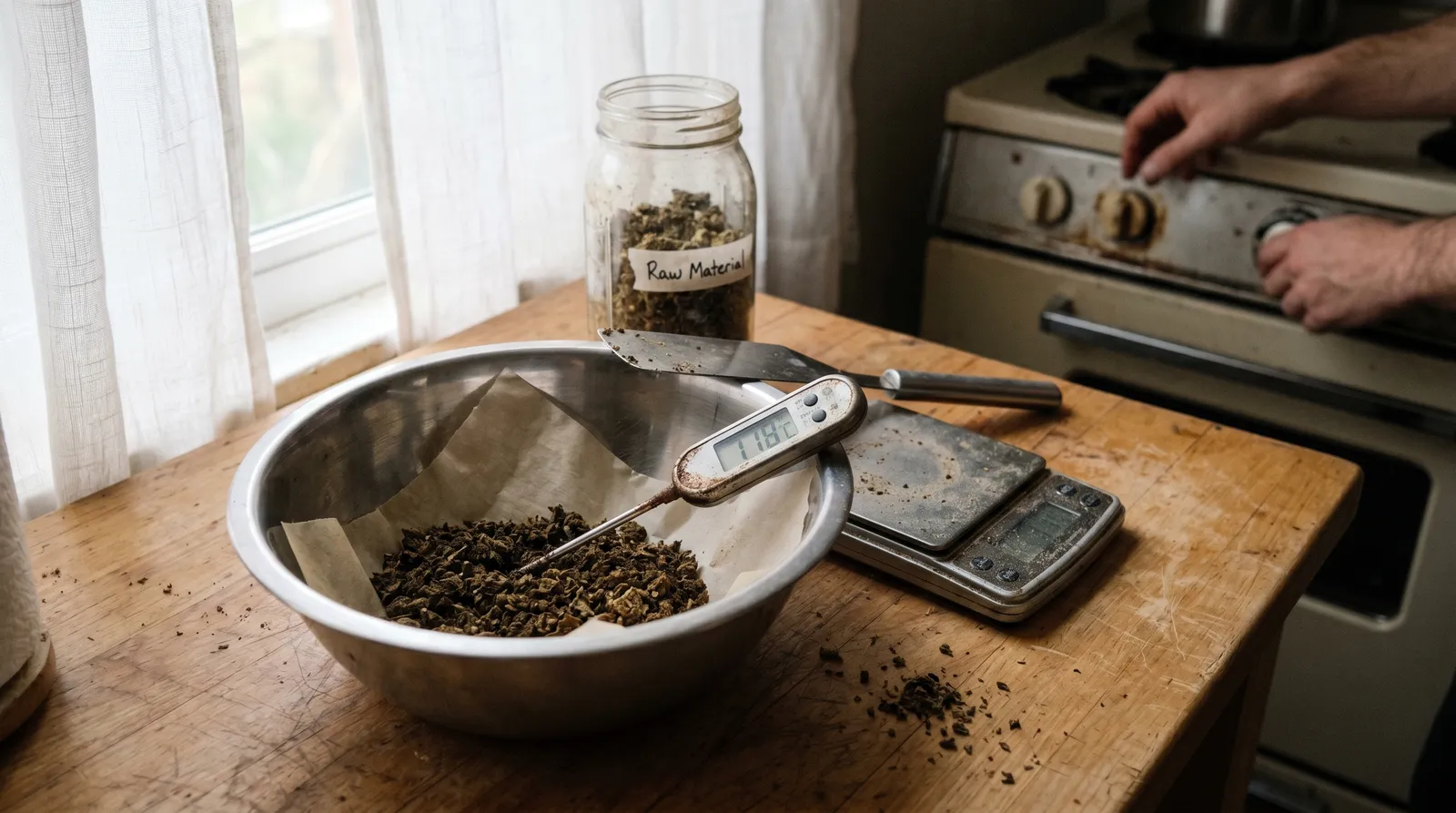
Three things matter. First: decarboxylation. Raw cannabis contains THCA (tetrahydrocannabinolic acid), which has a carboxyl group that blocks CB1 binding. Heating to 110–120°C for 30–45 minutes removes CO₂ and converts THCA to Δ9-THC. Under-heat and you get weak gummies; over-heat (above 157°C) and you lose THC to Δ8 and CBN, shifting the effect profile toward sedation (Wang et al., 2016).
Second: lipophilicity. THC has a log P of roughly 6.97 — it binds to fat, not water. Infusion requires a lipid carrier (coconut oil, MCT, butter). Simmering decarbed flower in oil at 70–90°C for 2–4 hours extracts around 50–70% of available cannabinoids (the remainder stays bound to plant material; this is the single biggest source of dose uncertainty in home edibles).
Third: emulsification. Oil and gelatine-water don't want to mix. Without an emulsifier (sunflower lecithin at 1/4 tsp per cup of liquid is the standard), THC floats to the top of the mould and concentrates in the last few gummies poured. This is how you end up with a batch where gummy 1 does nothing and gummy 20 sends someone to bed for 12 hours.
Cannabinoid profile of typical infused oil
| Compound | Role | Typical proportion (decarbed flower) |
|---|---|---|
| Δ9-THC | CB1 partial agonist — primary psychoactive | 15–25% |
| CBD | Allosteric modulator; may temper THC effects | 0.1–5% (strain-dependent) |
| CBN | Oxidation product of THC; mildly sedating | 0.5–2% |
| CBG | Non-intoxicating cannabinoid | 0.5–1% |
| Terpenes (myrcene, limonene, pinene) | Modulate subjective effects | 1–3% |
Home extraction efficiency varies between roughly 40% and 70% depending on grind, time, and temperature — without lab testing, any claimed per-gummy dose is an estimate within a ±30% margin.
What oral THC actually feels like
Edibles hit differently from smoking. Onset is 30 minutes to 2 hours depending on stomach contents; peak is 2–4 hours; total duration is 4–8 hours with a slow taper (Huestis, 2007). The metabolite 11-hydroxy-THC produced in the liver is more potent than Δ9-THC itself and crosses the blood-brain barrier efficiently, which is why the same THC milligrams feel stronger orally than when inhaled.
At 2.5–5 mg: mild relaxation, slight euphoria (using the clinical descriptor), increased appetite, mild perceptual shifts. At 10–15 mg for non-tolerant adults: pronounced intoxication, time distortion, possible anxiety. Above 20 mg in edible-naïve users, published case reports describe acute anxiety, tachycardia, and cannabis-induced psychosis in vulnerable individuals (Monte et al., 2019).
Effects by onset stage
| Stage | Time | What's happening |
|---|---|---|
| Waiting | 0–30 min | Absorption in stomach and small intestine; nothing yet |
| Onset | 30–90 min | First-pass hepatic conversion; effects ramp |
| Peak | 2–4 hours | 11-OH-THC concentration peaks |
| Plateau | 3–6 hours | Steady effects; appetite, mild sedation |
| Taper | 6–8+ hours | Gradual return to baseline; residual grogginess possible |
Dosage ranges from published literature
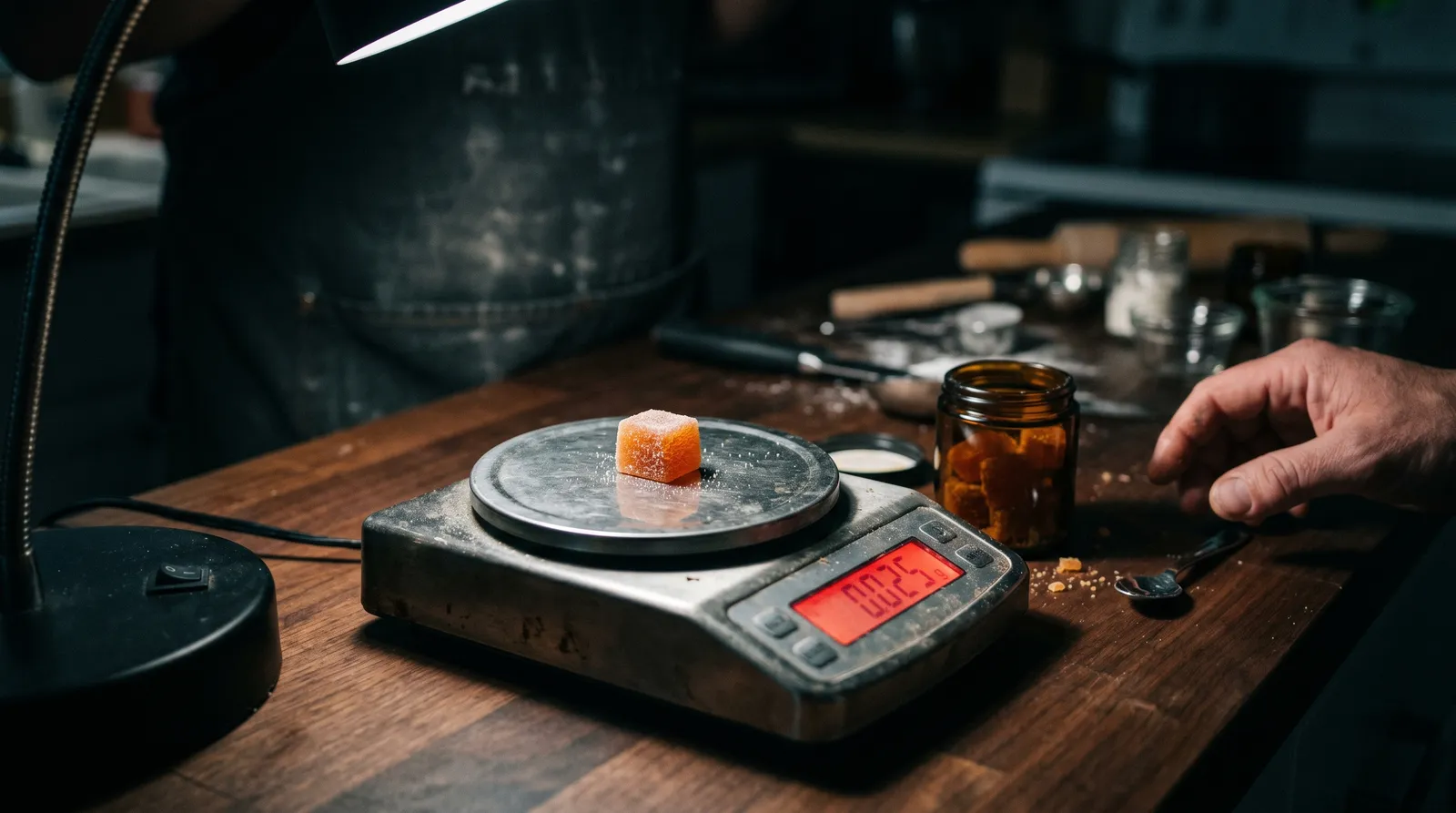
MacCallum and Russo (2018) recommend a "start low, go slow" protocol for oral cannabinoids: 2.5 mg for naïve users, titrated upward every 2–3 days. Colorado's state-mandated single-serving edible dose is 10 mg — a useful ceiling for home production.
| Level | Per-gummy THC | Reported effect in clinical/published literature |
|---|---|---|
| Threshold | 1–2.5 mg | Subtle relaxation; microdose range (Kuhathasan et al., 2019) |
| Low | 2.5–5 mg | Mild intoxication; standard starting dose for naïve adults |
| Common | 5–10 mg | Clear intoxication; Colorado standard serving |
| Strong | 10–20 mg | Pronounced effects; tolerant users only |
| Heavy | 20 mg+ | High adverse-event risk in naïve users (Monte et al., 2019) |
Wait a full 2 hours before redosing. The most common edible ER visit reported in Monte et al. (2019) involved consumers who ate a second dose at the 60–90 minute mark, before the first had peaked.
Step-by-step method
Step 1: Decarboxylate the flower
Break 7 g of flower into pea-sized pieces — don't grind to powder, you'll lose it through the oil strainer later. Spread on parchment on a baking tray. Heat at 115°C for 40 minutes. The flower should turn from green to light brown and smell strongly. Let it cool to room temperature before handling.
Step 2: Infuse the oil
Combine decarbed flower with 1 cup (240 ml) of refined coconut oil or MCT oil in a double boiler or on very low direct heat. Maintain 70–90°C for 2–4 hours, stirring occasionally. Do not boil. Sous vide at 85°C for 4 hours gives the most consistent extraction if you have the kit. Strain through cheesecloth into a glass jar, pressing gently — squeeze too hard and you push chlorophyll through, making bitter gummies.
Step 3: Do the dose maths
Assume 20% THC flower = 200 mg THC per gram. 7 g = 1,400 mg theoretical maximum. Decarb efficiency ~87%, extraction efficiency ~60%, so realistic yield is roughly 730 mg THC in your cup of oil. If you use 2 tablespoons (30 ml) of that oil in a gummy batch producing 40 gummies, each gummy contains approximately 2.3 mg THC. Test with one gummy, wait 2 hours.
Step 4: Make the gummies
Base recipe: 1/2 cup cold water, 1/2 cup fruit juice or purée, 3 tablespoons gelatine (or 2 tablespoons pectin + citric acid for pectin-based), 2 tablespoons honey or sugar, 1/4 teaspoon sunflower lecithin, 2 tablespoons infused oil. Bloom gelatine in cold water. Warm juice with sweetener to 60°C — do not boil. Whisk in gelatine until dissolved. Add lecithin, then slowly drizzle in infused oil while whisking constantly. Pour immediately into silicone moulds. The emulsion separates within minutes, so speed matters.
Step 5: Set and store
Refrigerate 2 hours minimum. Pop out of moulds, dust with a 50/50 citric acid and sugar mix to prevent sticking. Store in an airtight container in the fridge for up to 3 weeks, or freeze for up to 6 months. Label clearly with dose and date — and put them somewhere children and pets absolutely cannot reach. Paediatric edible exposures in Monte et al. (2019) overwhelmingly involved unlabelled home batches in unsecured containers.
Safety and drug interactions
Acute adverse effects of oral THC include tachycardia, orthostatic hypotension, anxiety, paranoia, nausea, and in high doses, cannabis-induced psychosis (Volkow et al., 2017). Harvard Health (2024) summarised emerging evidence that edible cannabis users show elevated rates of acute cardiac events, particularly in adults over 50 with pre-existing cardiovascular risk. Cannabinoid hyperemesis syndrome — cyclic vomiting from chronic high-dose use — is increasingly documented (Sorensen et al., 2017).
Home production adds specific risks: unknown potency per gummy, uneven distribution if emulsion fails, and contamination risk from unclean handling. Without lab testing you are estimating doses, and that estimate can be off by 30% in either direction even with careful technique.
Interactions with common medications
| Medication class | Interaction | Risk |
|---|---|---|
| Warfarin and other anticoagulants | THC raises INR via CYP2C9 inhibition (Damkier et al., 2019) | High |
| CNS depressants (benzodiazepines, opioids, alcohol) | Additive sedation, respiratory impact | High |
| MAOIs | Elevated blood pressure, tachycardia | High |
| SSRIs/SNRIs | Possible serotonergic effects; case reports of increased anxiety | Moderate |
| CYP3A4 inhibitors (clarithromycin, ketoconazole) | Elevated THC blood levels | Moderate |
| Antipsychotics | May reduce effectiveness; contraindicated in psychotic disorders | Moderate |
| Grapefruit juice | CYP3A4 inhibition; mild potentiation | Low |
Emergency information
If someone consumes too much and experiences severe anxiety, tachycardia above 140 bpm, chest pain, fainting, vomiting that won't stop, or symptoms of acute psychosis: call emergency services (112 in the EU, 999 in the UK). The Dutch National Poison Information Centre is reachable via your GP or emergency line. Tell medical staff exactly what was taken, how much, and when. There is no fatal oral dose documented in adults, but acute cardiac events and severe psychological reactions do require medical management. For a bad but non-emergency experience: cool room, hydration, black pepper (terpene-based folk remedy with weak evidence), and time. Effects fade in 6–8 hours.
References
- Pertwee, R. G. (2008). The diverse CB1 and CB2 receptor pharmacology of three plant cannabinoids. British Journal of Pharmacology, 153(2), 199–215.
- Huestis, M. A. (2007). Human cannabinoid pharmacokinetics. Chemistry & Biodiversity, 4(8), 1770–1804.
- Lemberger, L., et al. (1972). 11-hydroxy-Δ9-tetrahydrocannabinol: pharmacology, disposition, and metabolism in man. Science, 177(4043), 62–64.
- MacCallum, C. A., & Russo, E. B. (2018). Practical considerations in medical cannabis administration and dosing. European Journal of Internal Medicine, 49, 12–19.
- Monte, A. A., et al. (2019). Acute illness associated with cannabis use, by route of exposure. Annals of Internal Medicine, 170(8), 531–537.
- Volkow, N. D., et al. (2017). Adverse health effects of marijuana use. New England Journal of Medicine, 370(23), 2219–2227.
- Wang, M., et al. (2016). Decarboxylation study of acidic cannabinoids. Cannabis and Cannabinoid Research, 1(1), 262–271.
- Damkier, P., et al. (2019). Interaction between warfarin and cannabis. Basic & Clinical Pharmacology & Toxicology, 124(1), 28–31.
- Di Forti, M., et al. (2019). The contribution of cannabis use to variation in the incidence of psychotic disorder across Europe. The Lancet Psychiatry, 6(5), 427–436.
- Alsherbiny, M. A., & Li, C. G. (2019). Medicinal cannabis — potential drug interactions. Medicines, 6(1), 3.
- Sorensen, C. J., et al. (2017). Cannabinoid hyperemesis syndrome: diagnosis, pathophysiology, and treatment — a systematic review. Journal of Medical Toxicology, 13(1), 71–87.
- Kuhathasan, N., et al. (2019). The use of cannabinoids for sleep: a critical review on clinical trials. Experimental and Clinical Psychopharmacology, 27(4), 383–401.
- Harvard Health Publishing (2024). Smoking marijuana appears to be risky for your heart. What about cannabis gummies or other edibles?
Last updated: April 2026
Domande frequenti
8 domandeHow much THC should be in each homemade gummy?
Why do my homemade THC gummies have uneven potency?
Do I have to decarboxylate cannabis before making gummies?
How long do homemade THC gummies last?
Can I make THC gummies without making infused oil first?
Why do edible THC gummies feel stronger than smoking the same amount?
What gelling agent works best for THC gummies — gelatin or pectin?
How long do homemade THC gummies stay potent in storage?
Informazioni su questo articolo


Joshua Askew serves as Editorial Director for Azarius wiki content. He is Managing Director at Yuqo, a content agency specialising in cannabis, psychedelics and ethnobotanical editorial work across multiple languages. Th
Questo articolo wiki è stato redatto con l’assistenza dell’IA e revisionato da Joshua Askew, Managing Director at Yuqo. Supervisione editoriale di Adam Parsons.
Avviso medico. Questi contenuti hanno finalità esclusivamente informative e non costituiscono un parere medico. Consulta un operatore sanitario qualificato prima di utilizzare qualsiasi sostanza.
Ultima revisione 26 aprile 2026