
Dabbing for Beginners: What You Need to Start
Definition
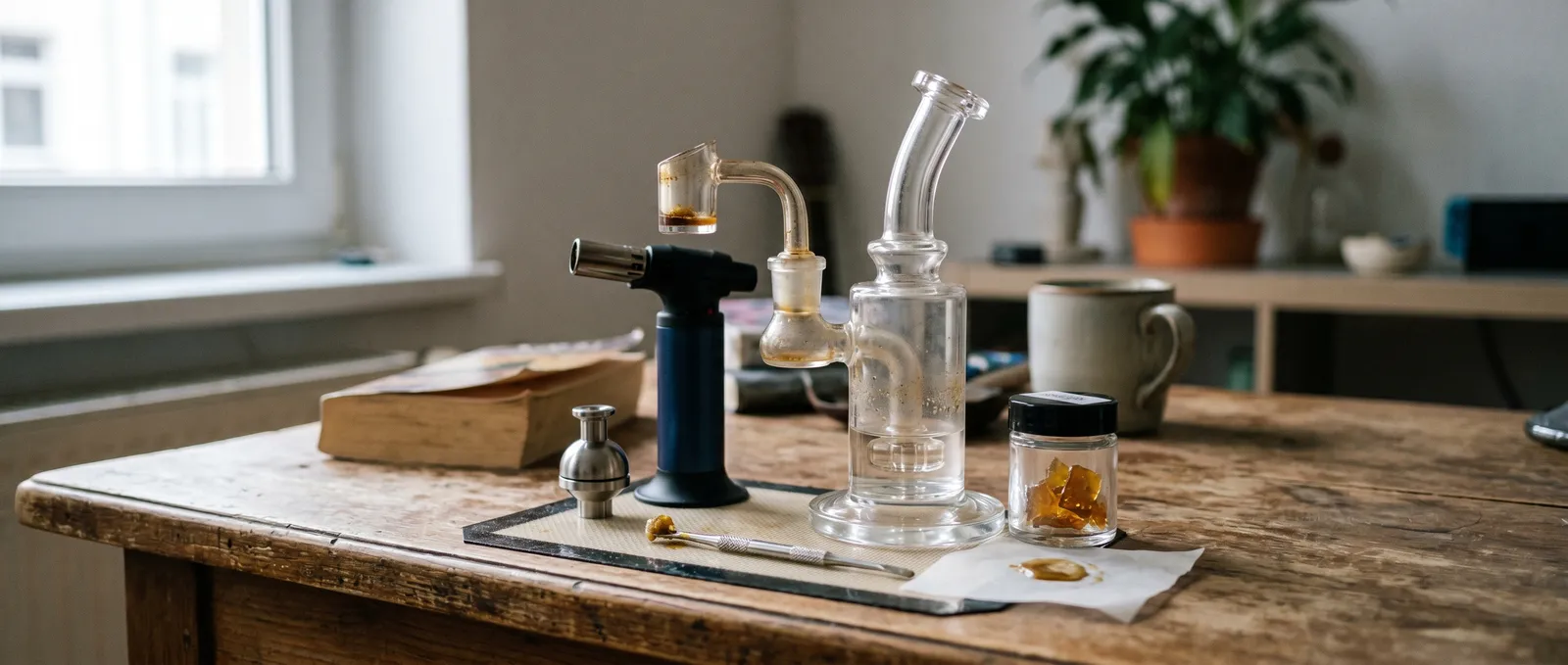
Dabbing for beginners is a practical introduction to vaporising cannabis concentrates off a heated surface through a water-filtered rig, delivering faster onset and stronger terpene flavour than smoking flower. Concentrates typically contain 60–90% cannabinoids versus 15–25% for dried flower (Meehan-Atrash et al., 2015). This guide covers every piece of hardware a beginner needs — from the rig and banger to the carb cap and cleaning supplies.
What Is Dabbing and Why the Fuss?
Dabbing for beginners is a practical starting point for adults who want to vaporise cannabis concentrates — wax, shatter, rosin, live resin — off a heated surface, then inhale the resulting vapour through a water-filtered rig. The method has been around since the early 2010s but has moved from niche hobby to mainstream consumption method over the past few years. For adults who already consume cannabis flower, concentrates offer a different experience: faster onset, stronger flavour from preserved terpenes, and considerably less plant material combusted. A 2015 Portland State University study found that dabbing at controlled temperatures (around 300–400 °C) produced vapour with significantly fewer combustion byproducts than smoking flower (Meehan-Atrash et al., 2015). The EMCDDA has also noted the rising prevalence of concentrate use across European markets, reflecting a broader shift in consumption patterns. That said, concentrates are potent — typically 60–90% cannabinoid content versus 15–25% for flower — so the learning curve for dabbing for beginners involves both hardware and restraint.
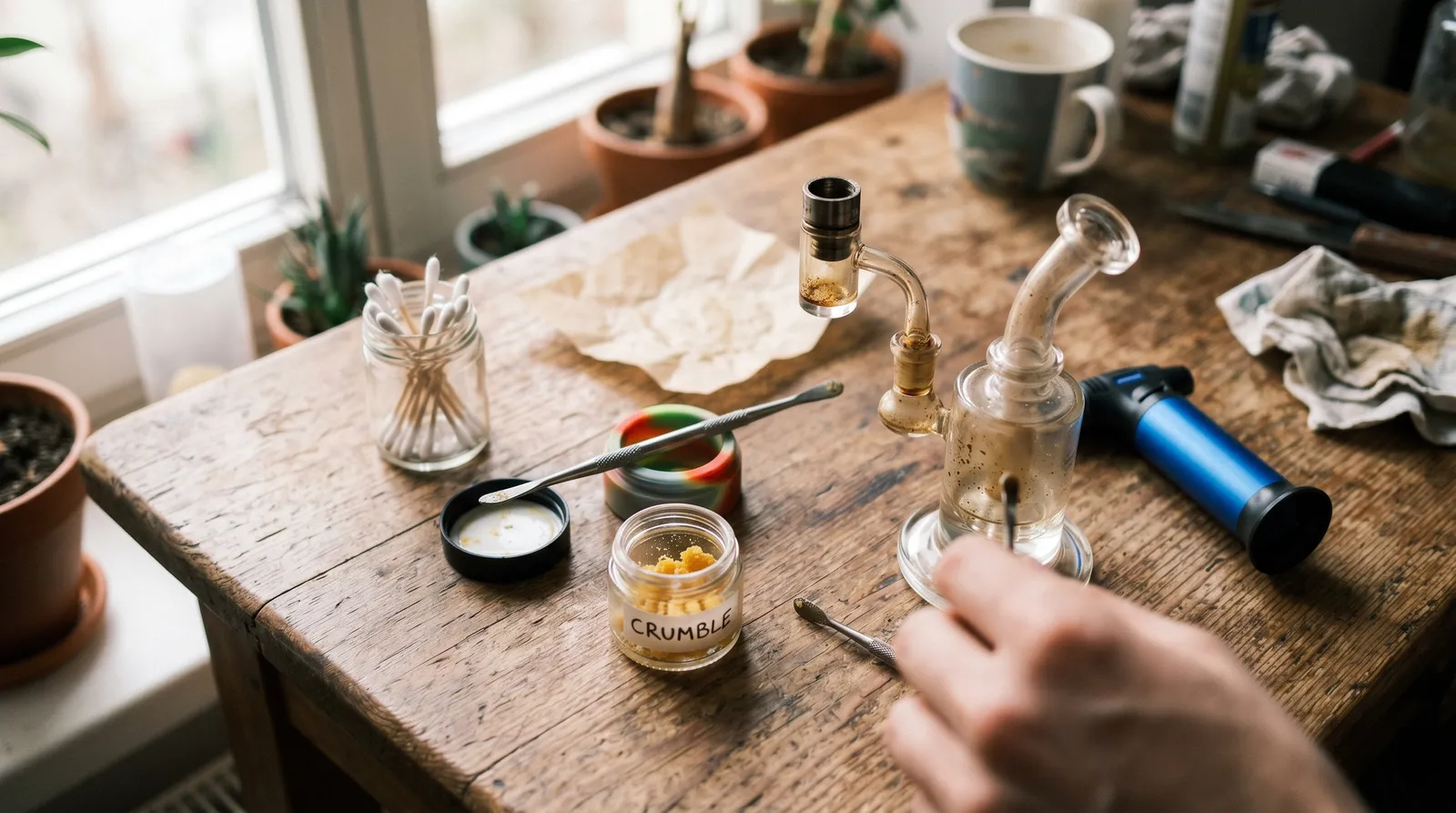
This guide walks you through every piece of kit you need to start dabbing, step by step, so nothing gets forgotten on the shopping list.
Step 1: The Dab Rig
A dab rig is a small water pipe designed specifically for vaporising concentrates rather than burning dry herb. It looks like a bong's compact cousin — shorter, with a smaller chamber. The reduced size isn't a cost-cutting measure; it's intentional. A smaller volume means the vapour travels a shorter distance, preserving flavour and reducing the condensation that would otherwise coat the inside of a larger piece.
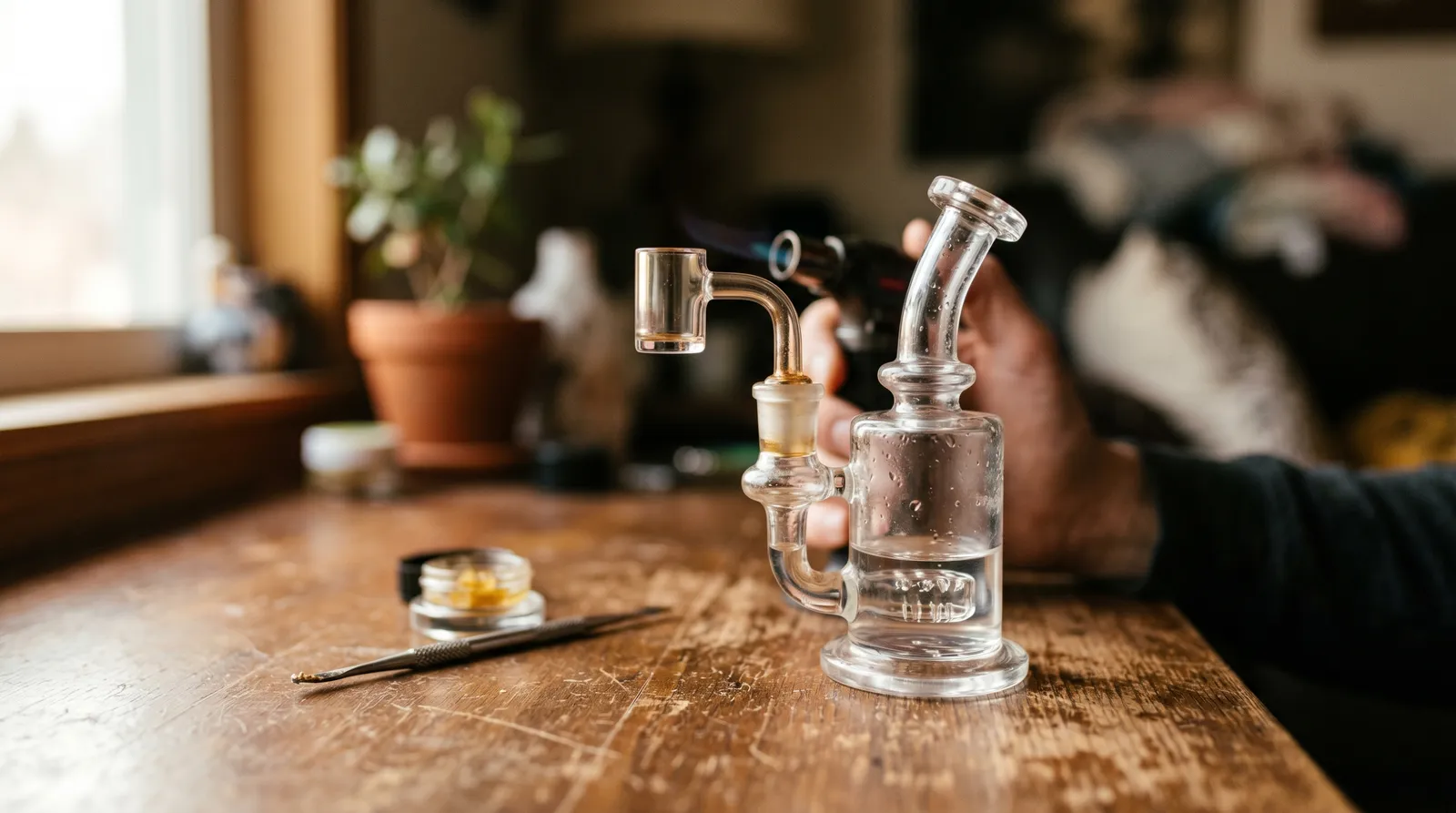
Most rigs are made from borosilicate glass and stand between 15 and 25 cm tall. You'll see two main joint sizes: 14.5 mm and 18.8 mm. The joint is where the banger (your heated surface — more on that in step 2) connects. Make sure the banger and rig share the same joint size, or you'll be hunting for adapters before you've even started.
Mini rigs — anything under 18 cm — are popular with beginners because they're portable, affordable, and deliver concentrated flavour. Percolator rigs add an extra layer of water filtration, which cools the vapour and smooths the draw. Either works. The main thing is that you're buying a rig with a joint designed for a banger, not a standard bowl for dry herb. If you want to get a solid starter setup, look at compact rigs from trusted headshop brands — the Azarius Mini Dab Rig range is worth browsing.
Step 2: The Quartz Banger
A quartz banger is the bucket-shaped attachment that you heat and drop your concentrate into. Quartz is the standard material for good reason: it heats evenly, retains heat well, doesn't crack easily from thermal shock, and — critically — doesn't off-gas at dabbing temperatures the way cheaper metals can. Titanium and ceramic bangers exist, but quartz has become the default for flavour-conscious dabbers.
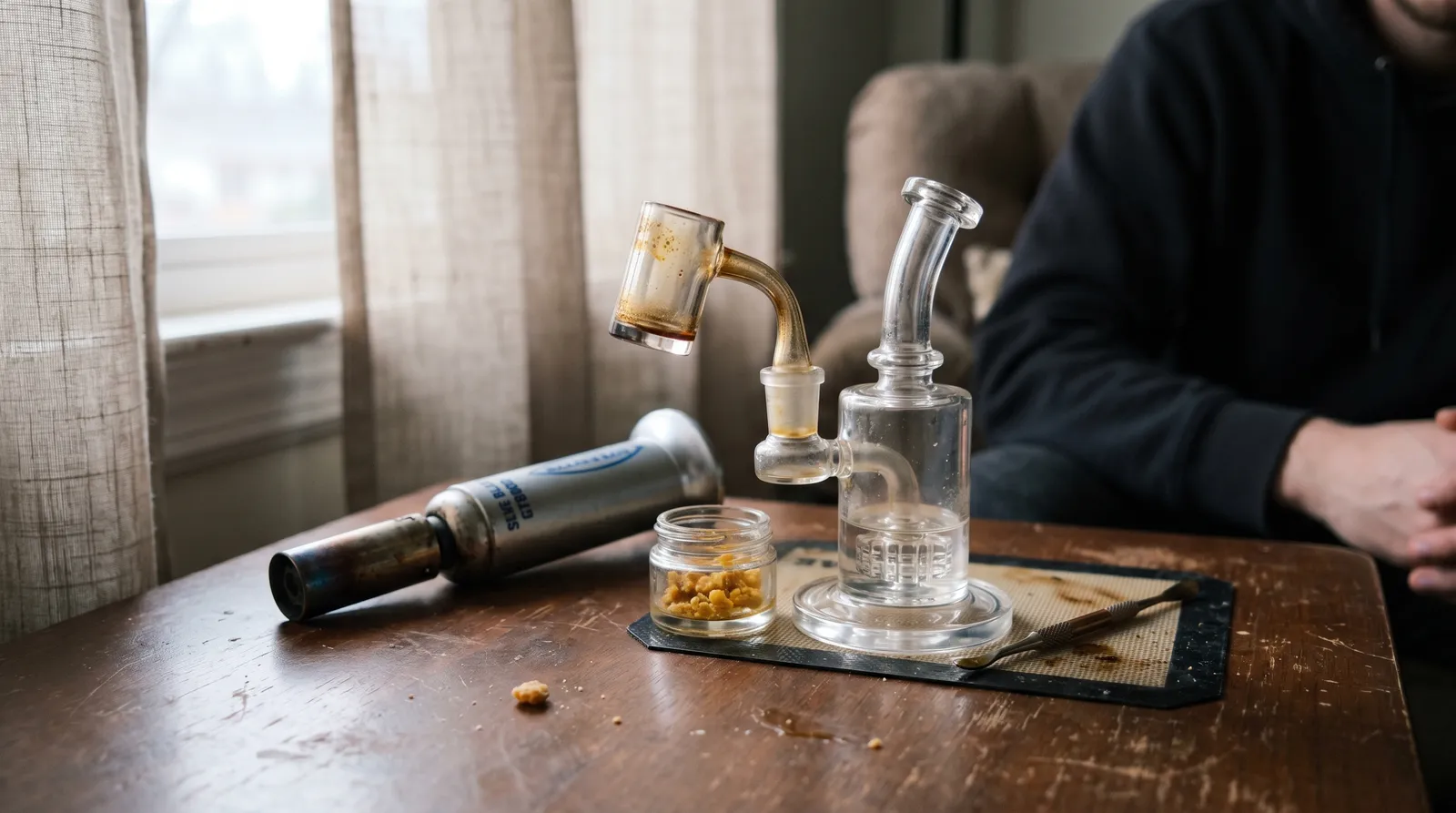
Bangers come in different thicknesses, usually measured in millimetres of wall width. Thicker walls (2–4 mm) retain heat longer, giving you a wider window for your dab. Thinner walls heat up faster but cool down quickly, which can leave concentrate pooled and unvaporised at the bottom. For a first banger, something in the 2–3 mm range is a solid middle ground.
Check the joint angle too. Most rigs take a 90-degree banger, but some compact designs use 45 degrees. Get this wrong and your banger points at the ceiling instead of sitting level.
Step 3: A Dab Torch
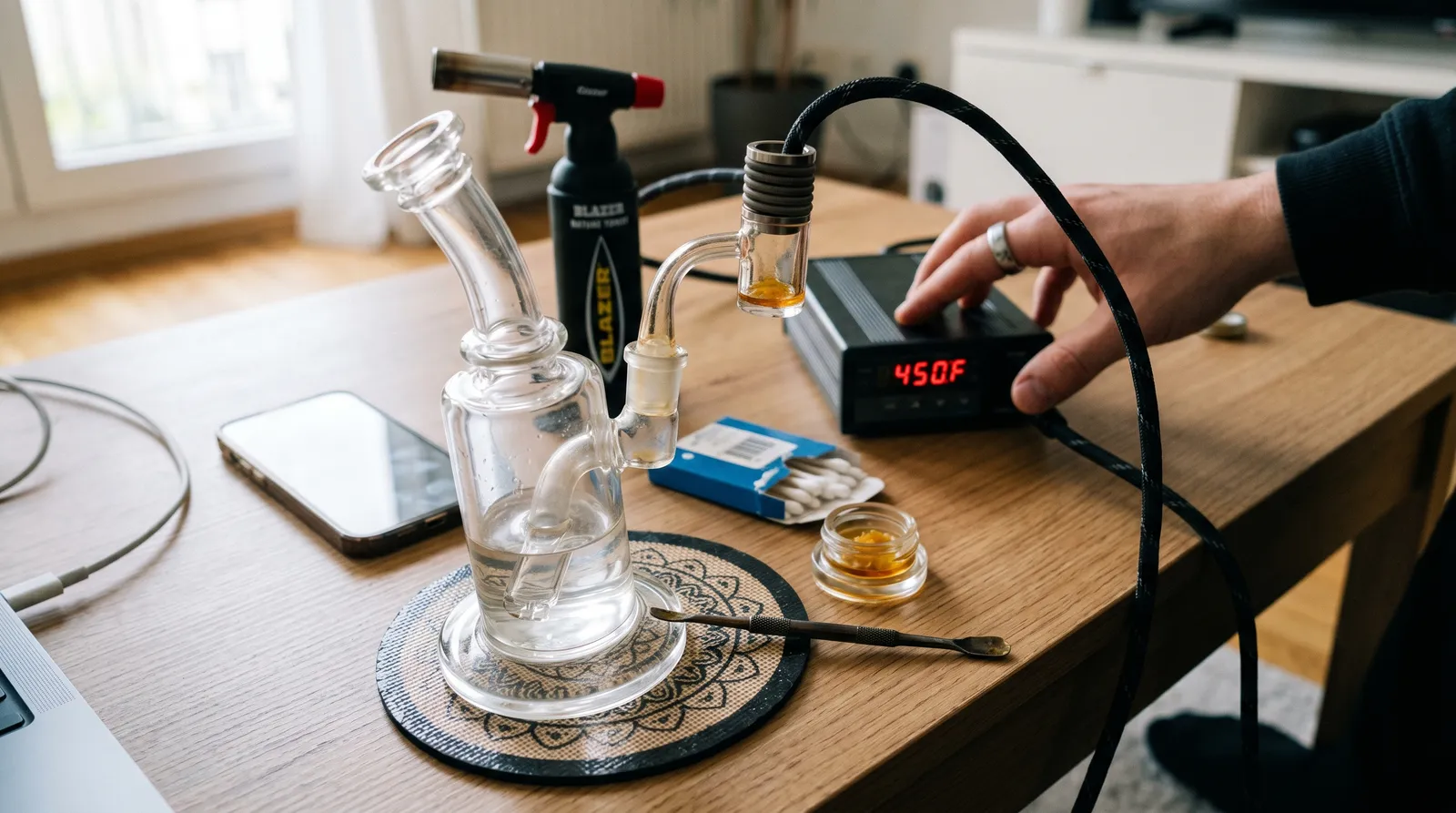
A butane dab torch is the heat source that brings your quartz banger to working temperature — roughly 250–315 °C (480–600 °F) for a low-temp dab that preserves terpenes. A standard lighter won't cut it here. Dab torches are refillable, adjustable, and designed to produce a focused flame rather than a diffused one.
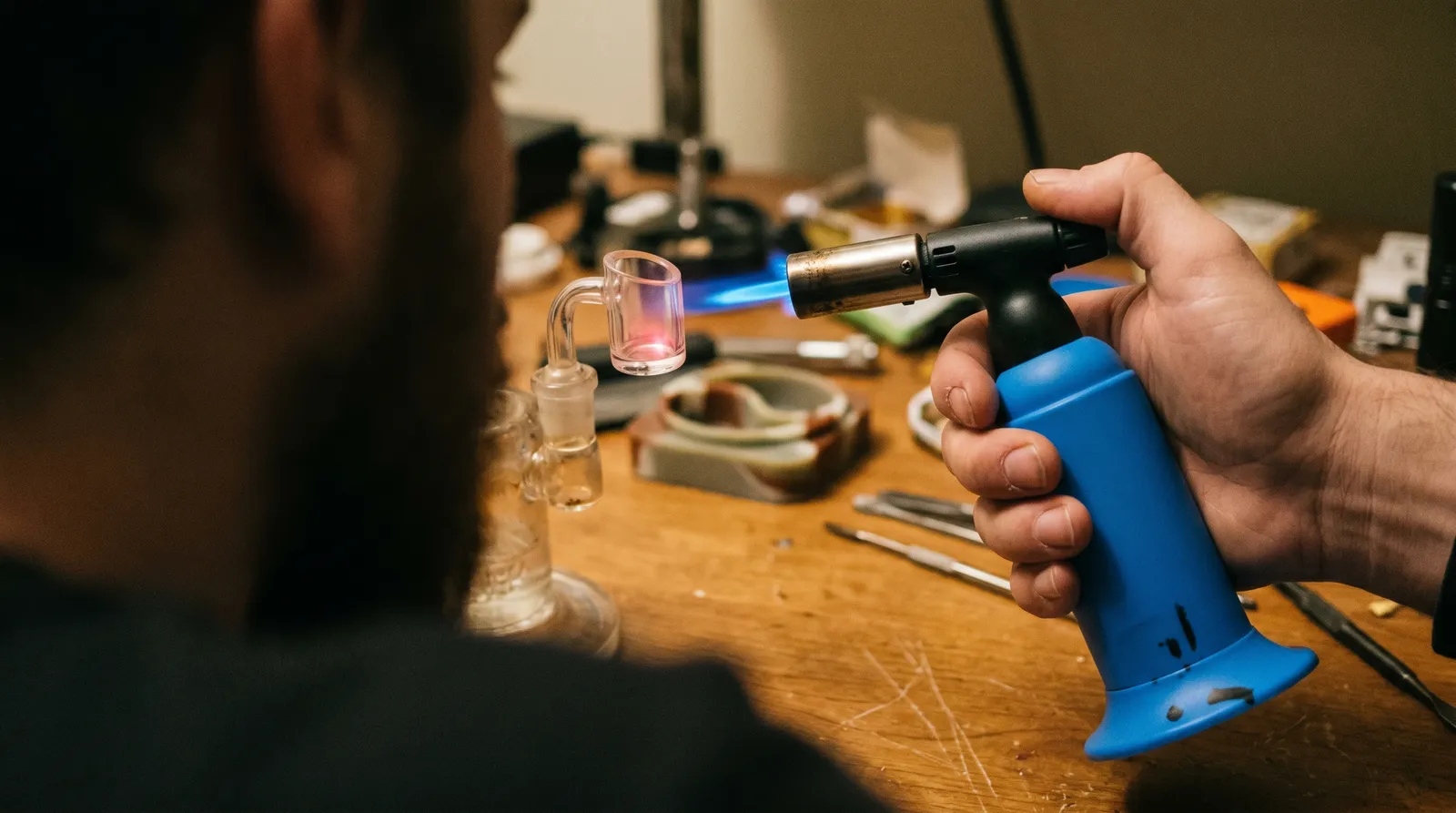
A word on safety: never heat a banger until it glows red. A red-hot banger exceeds 370 °C (700 °F), which combusts the concentrate rather than vaporising it, destroys terpenes, and produces harsher byproducts. Rabb et al. (2020) found that dabbing above 600 °F generated significantly higher levels of methacrolein and benzene compared to lower-temperature dabs. The goal is a warm, not scorching, surface.
Point the torch at the base and lower walls of the banger, keep the flame moving rather than fixed on one spot, and heat for 25–40 seconds depending on wall thickness. Then — and this is the part that trips up newcomers — let it cool down before you dab. Which brings us to the next step.
Step 4: Timing the Cool-Down
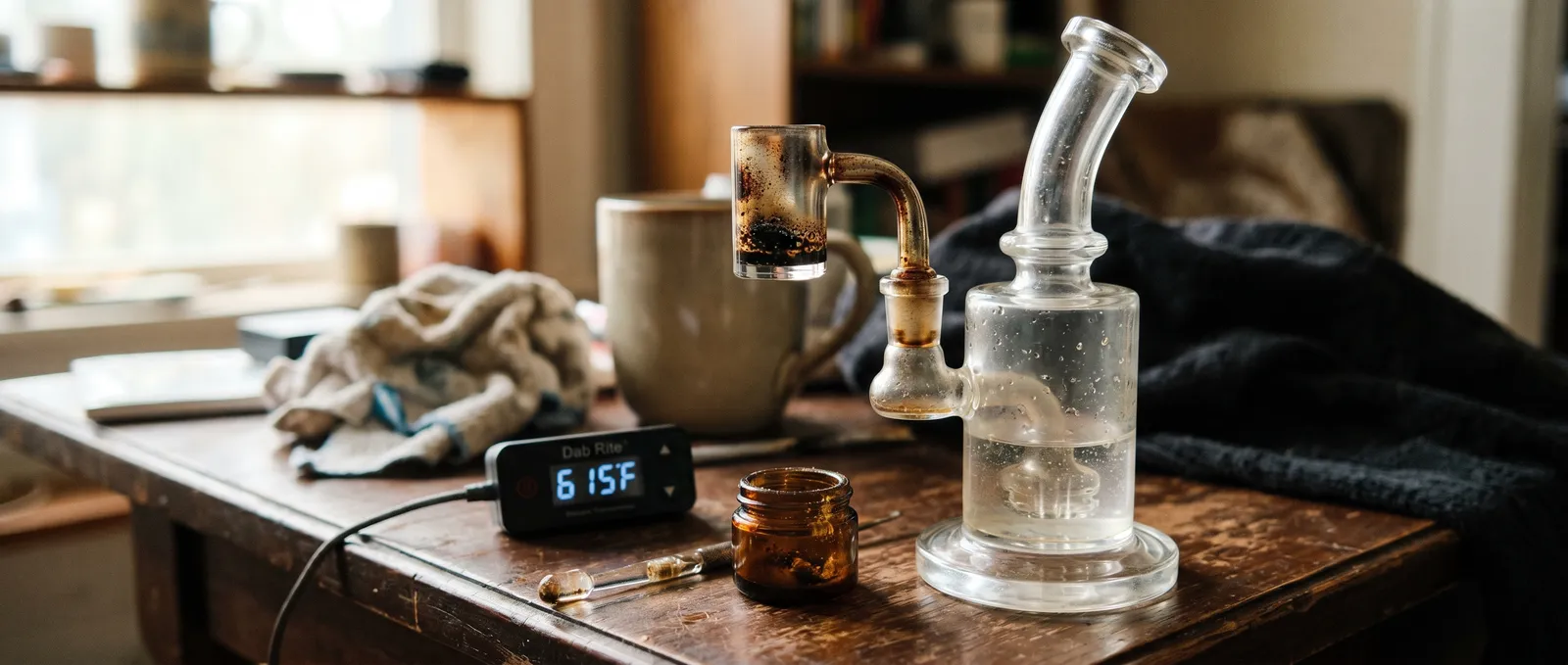
The cool-down period is the pause between torching and dabbing — typically 30–60 seconds — that lets the banger reach the ideal vaporisation range. The exact cool-down depends on your banger thickness, ambient temperature, and personal preference. Thicker bangers hold heat longer, so they need a longer wait. Some people use infrared thermometers to hit a precise temperature; others develop a feel for it over time. Aiming for 230–290 °C (450–550 °F) is a reasonable starting range — warm enough to vaporise the concentrate fully, cool enough to taste the terpene profile rather than char it.
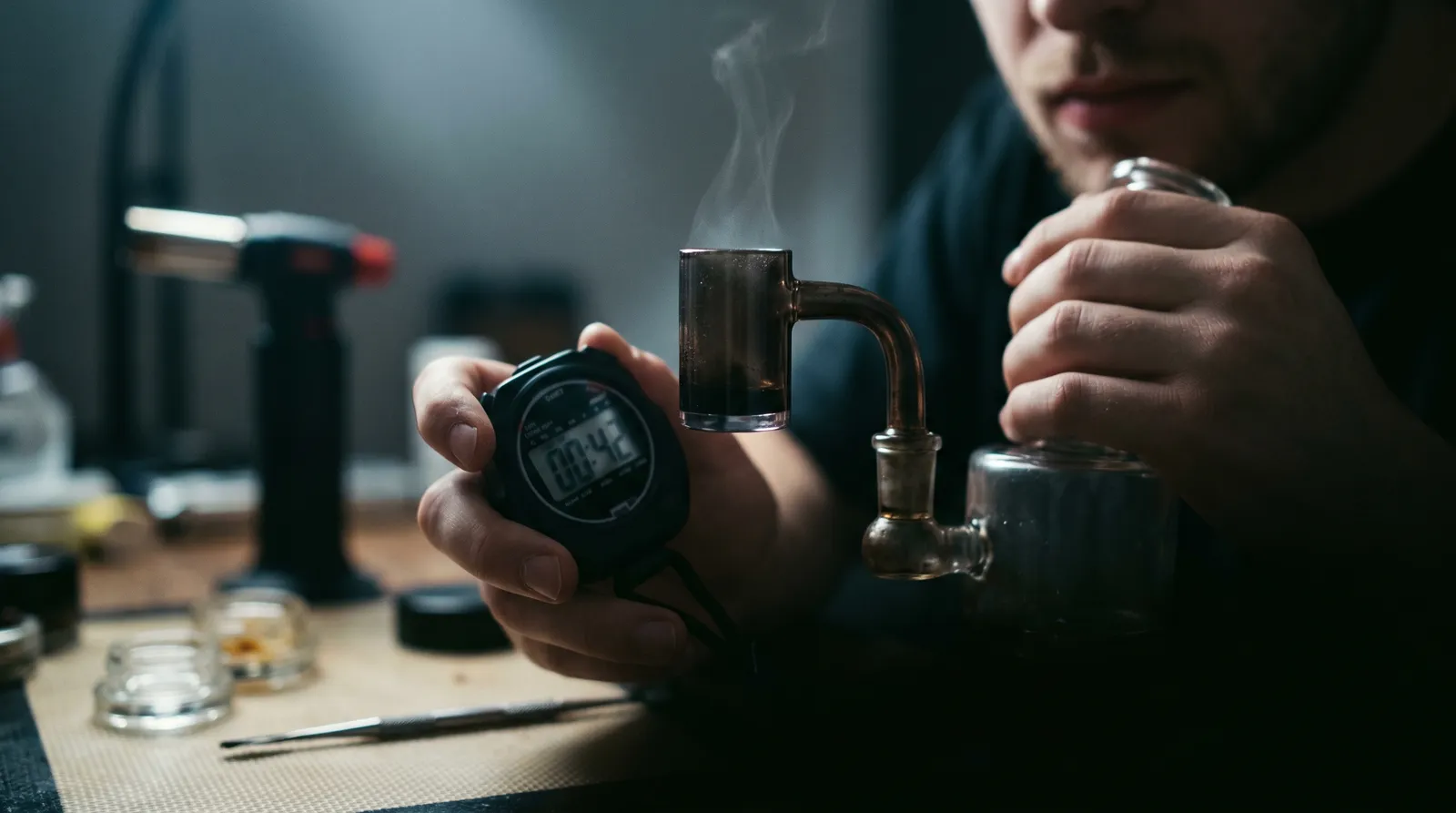
The quartz bangers that come back to us looking like burnt caramel are almost always from people who skip the cool-down entirely. Thirty seconds of patience saves both flavour and cleaning time — and keeps the banger clear rather than permanently clouded.
Step 5: The Dab Tool
A dab tool is a small metal or glass instrument used to scoop, pick, or portion a dose of concentrate and place it onto the heated banger. Concentrates are sticky, and you don't want to handle them with your fingers — both for hygiene and because body heat softens them instantly.
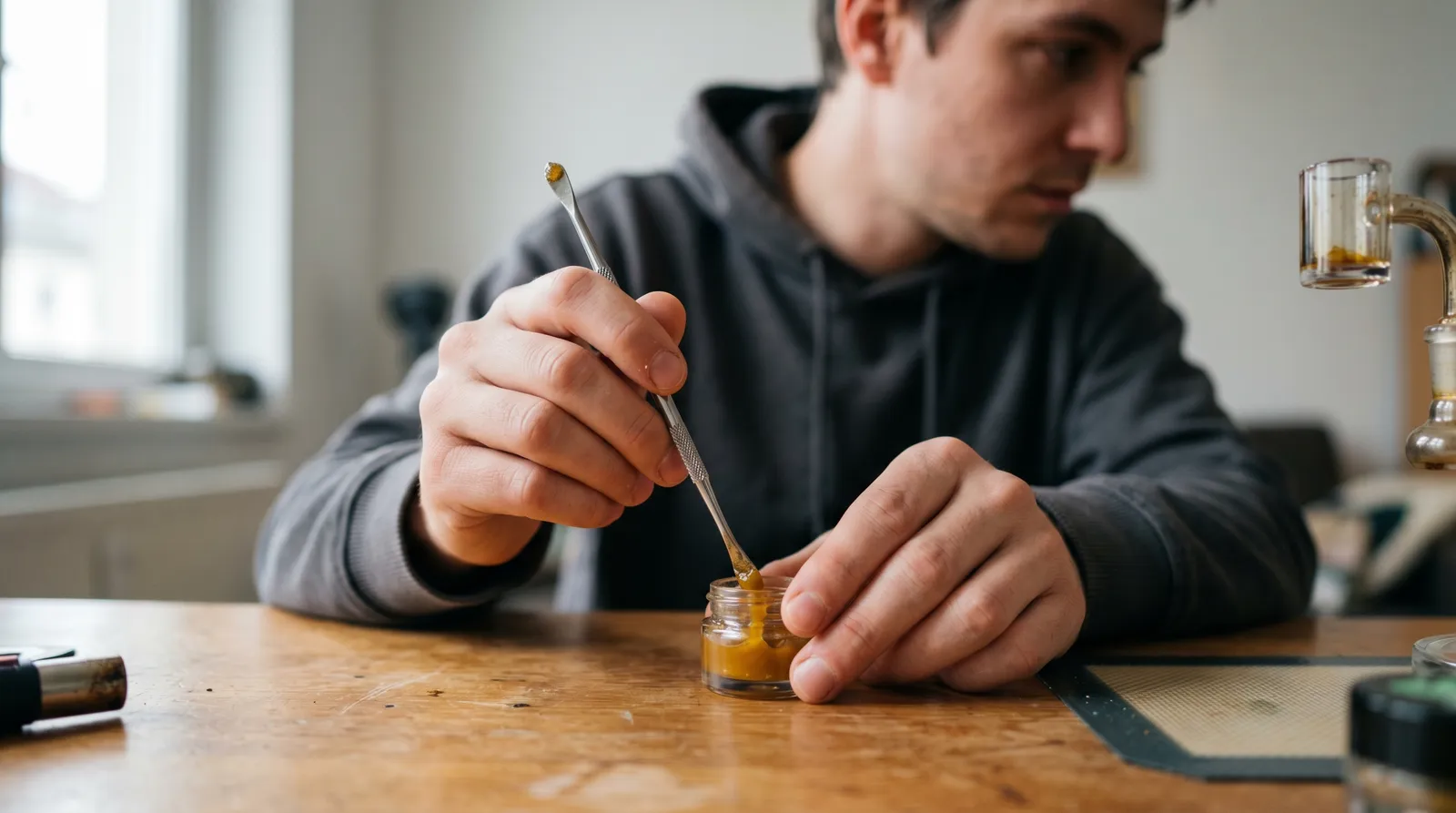
Different tool tips suit different concentrate consistencies. A flat scoop works for crumbly wax. A pointed pick handles shatter and snap-and-pull textures. A paddle-style tip is good for budder and softer concentrates. Many dab tool sets include multiple tips, which covers most scenarios. The amount you're loading should be small — roughly the size of a grain of rice for your first few attempts. Concentrates are far more potent than flower, and a little goes a long way.
Step 6: The Carb Cap
A carb cap is a lid that restricts airflow over the banger, lowering the effective boiling point so concentrate vaporises more completely at lower temperatures. Without one, a significant portion of your dab can pool at the bottom and never fully vaporise — wasted product and a messy banger.
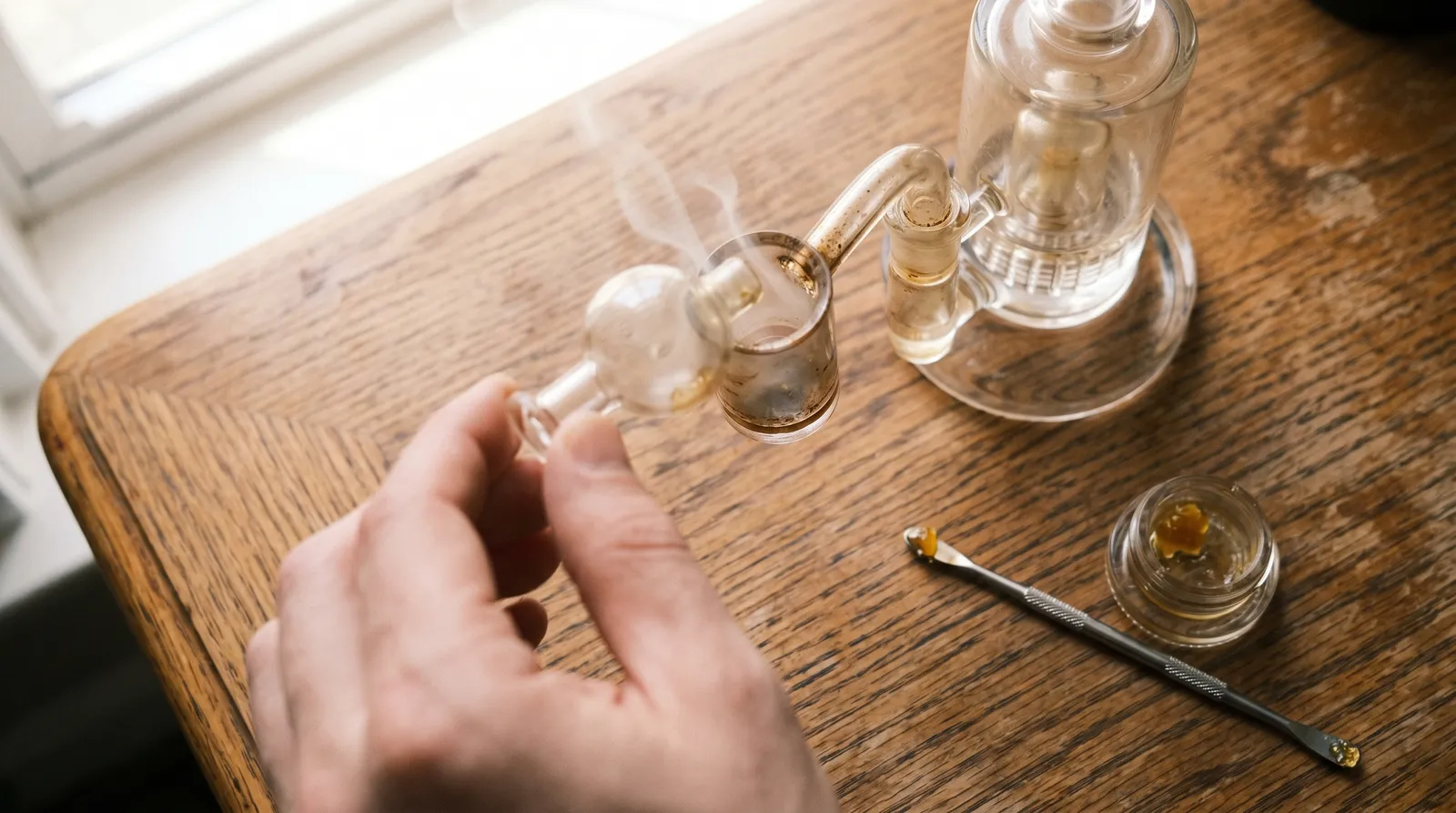
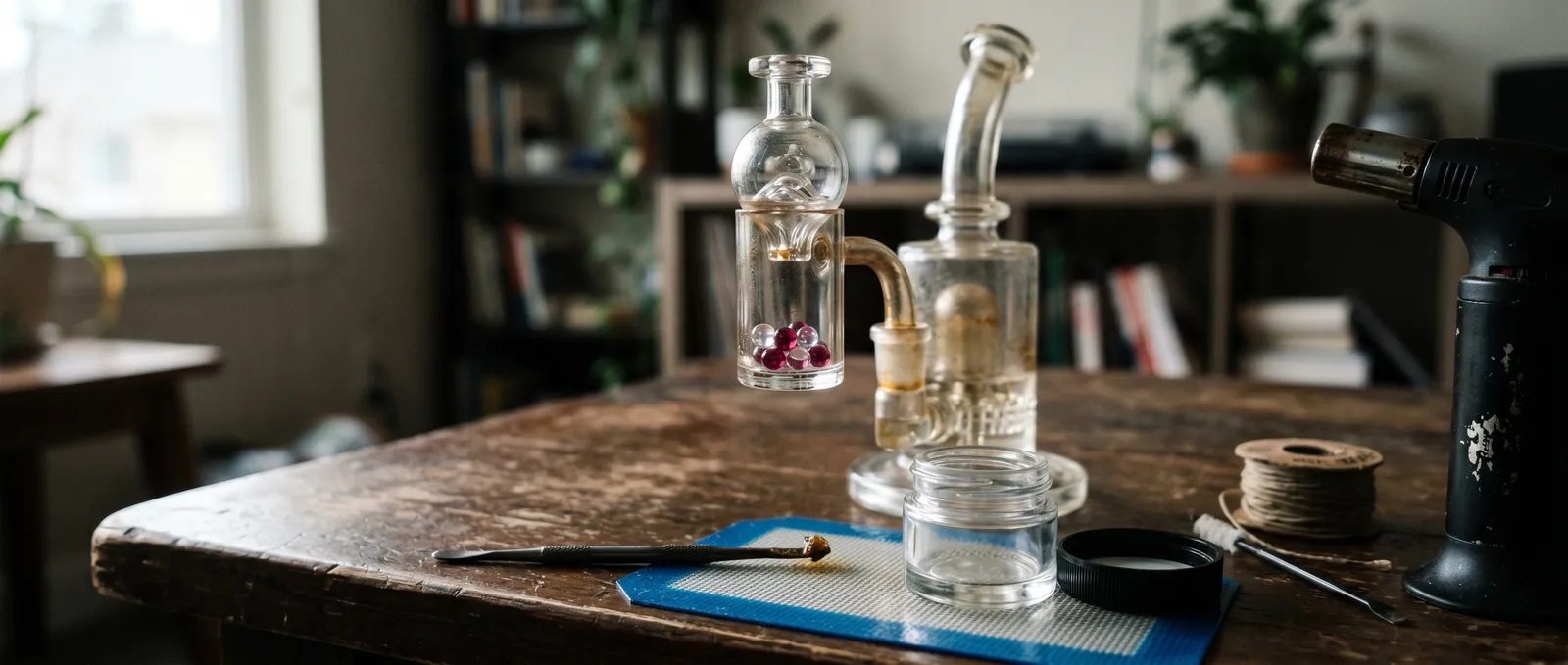
Directional carb caps have a small angled hole that lets you steer airflow across the bottom of the banger, pushing pooled concentrate toward the hotter walls. Bubble caps work on a similar principle but with a rounded shape that sits snugly over flat-top bangers. Either style makes a noticeable difference compared to dabbing without a cap at all.
Step 7: Terp Pearls (Optional but Useful)
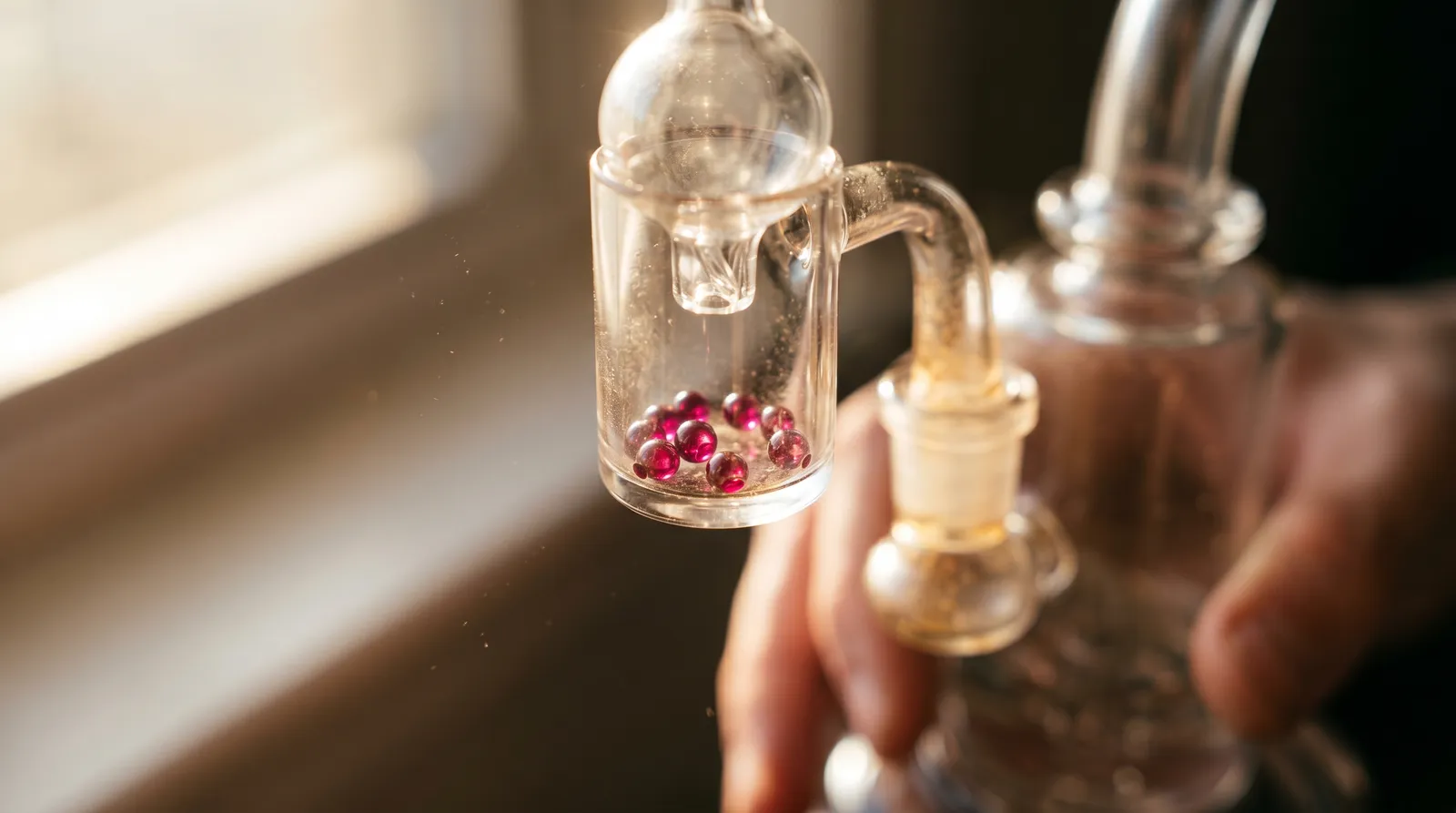
Terp pearls are small quartz, borosilicate, or ruby balls that sit inside the banger and spin when you inhale through a directional carb cap. They distribute heat more evenly across the banger floor, which means the concentrate contacts a larger heated surface area and vaporises more efficiently. They're not strictly necessary, but they reduce waste and improve flavour, especially at low temperatures. Two or three small pearls (4–6 mm) per banger is typical.
Step 8: Cleaning Supplies
Isopropyl alcohol and cotton buds are the two essentials that keep your banger and rig performing like new. After every session, while the banger is still warm (not hot), swab the inside with a cotton bud. For deeper cleaning, soak the banger in isopropyl alcohol (90%+) for 15–30 minutes. A clean banger heats evenly and tastes neutral; a dirty one imparts a burnt, acrid flavour to every dab.
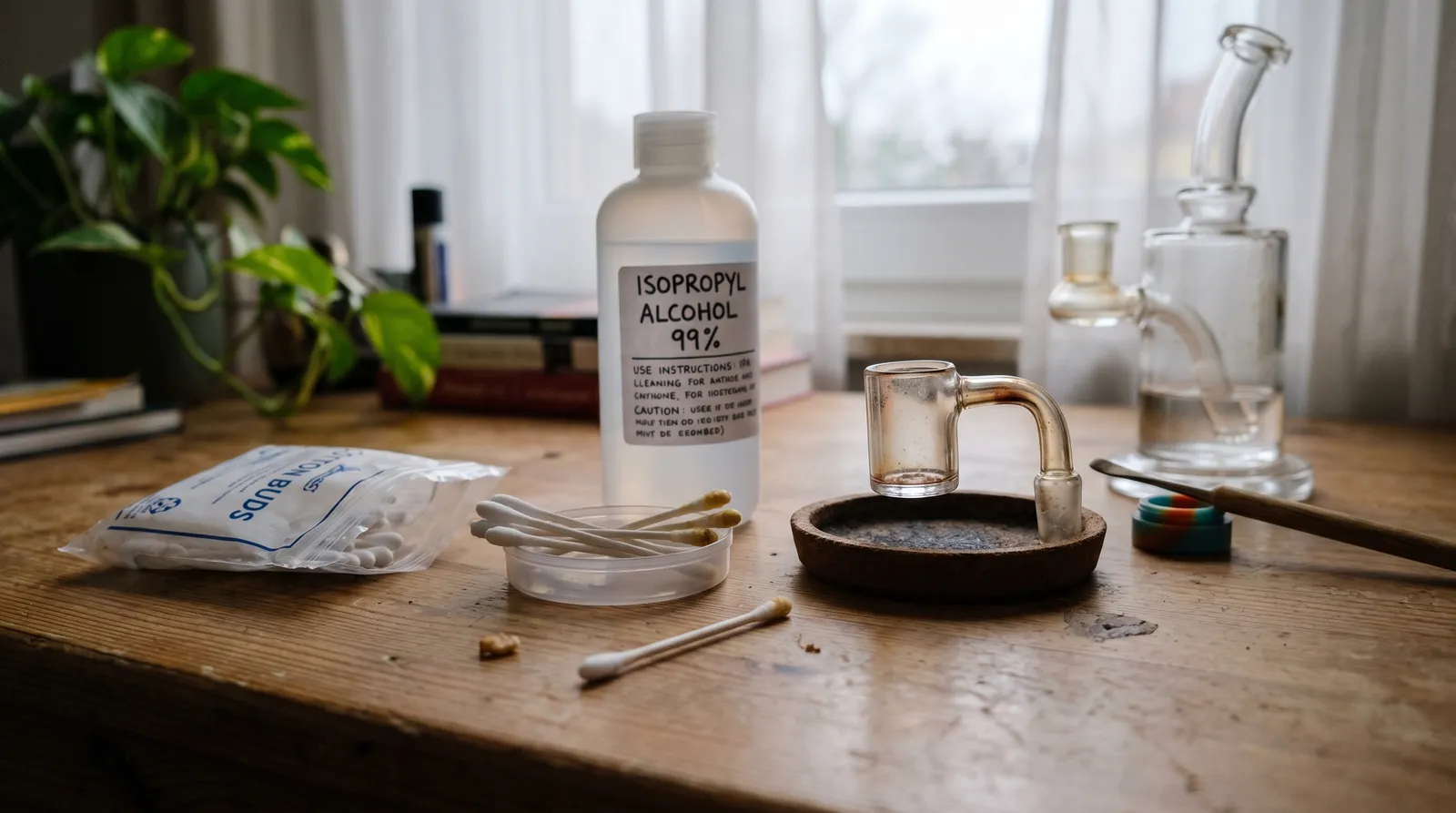
One safety note: isopropyl alcohol is flammable. Never use it near a lit torch, and make sure the banger is completely dry and free of alcohol residue before you heat it again. Ventilate the room when cleaning with iso — the fumes are not pleasant in an enclosed space.
For the rig itself, coarse salt and isopropyl shaken together will clear resin from the water chamber. Rinse thoroughly with warm water afterwards.
The Electric Alternative: E-Rigs and Dab Pens
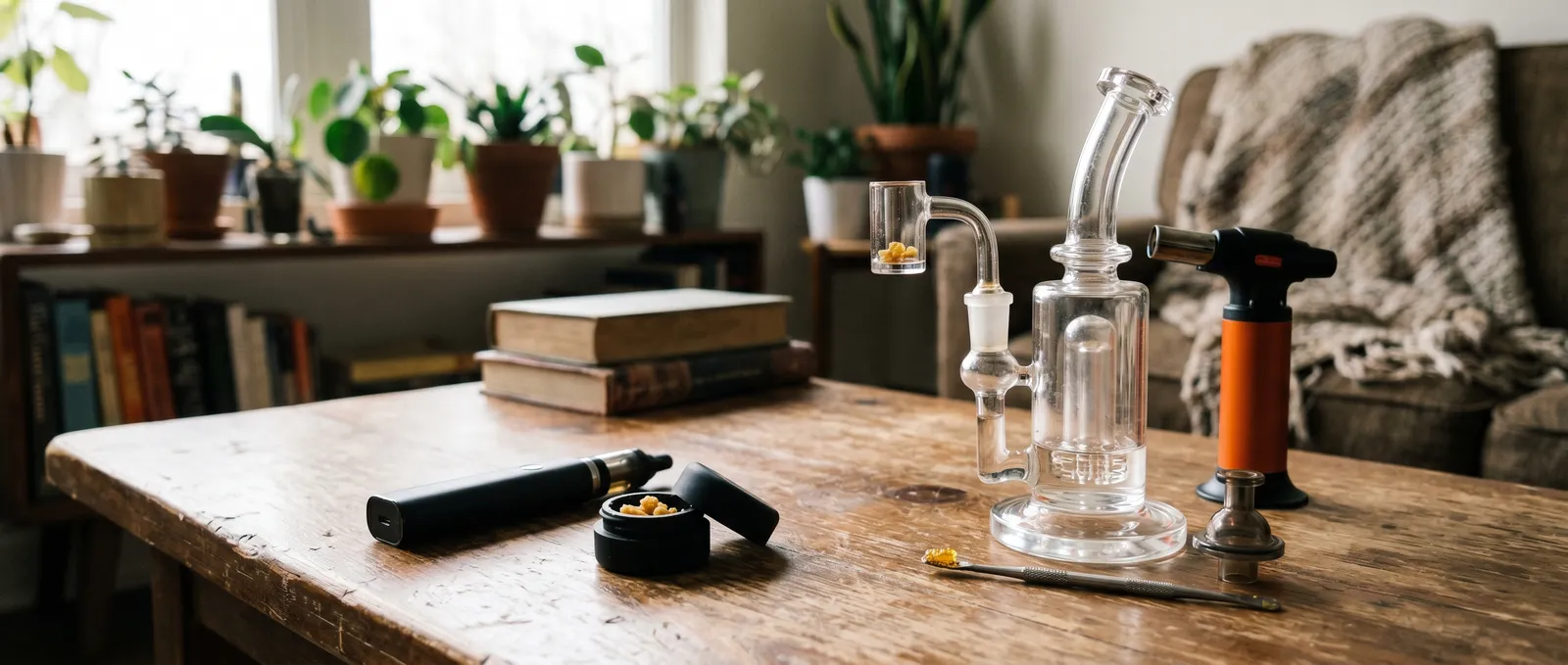
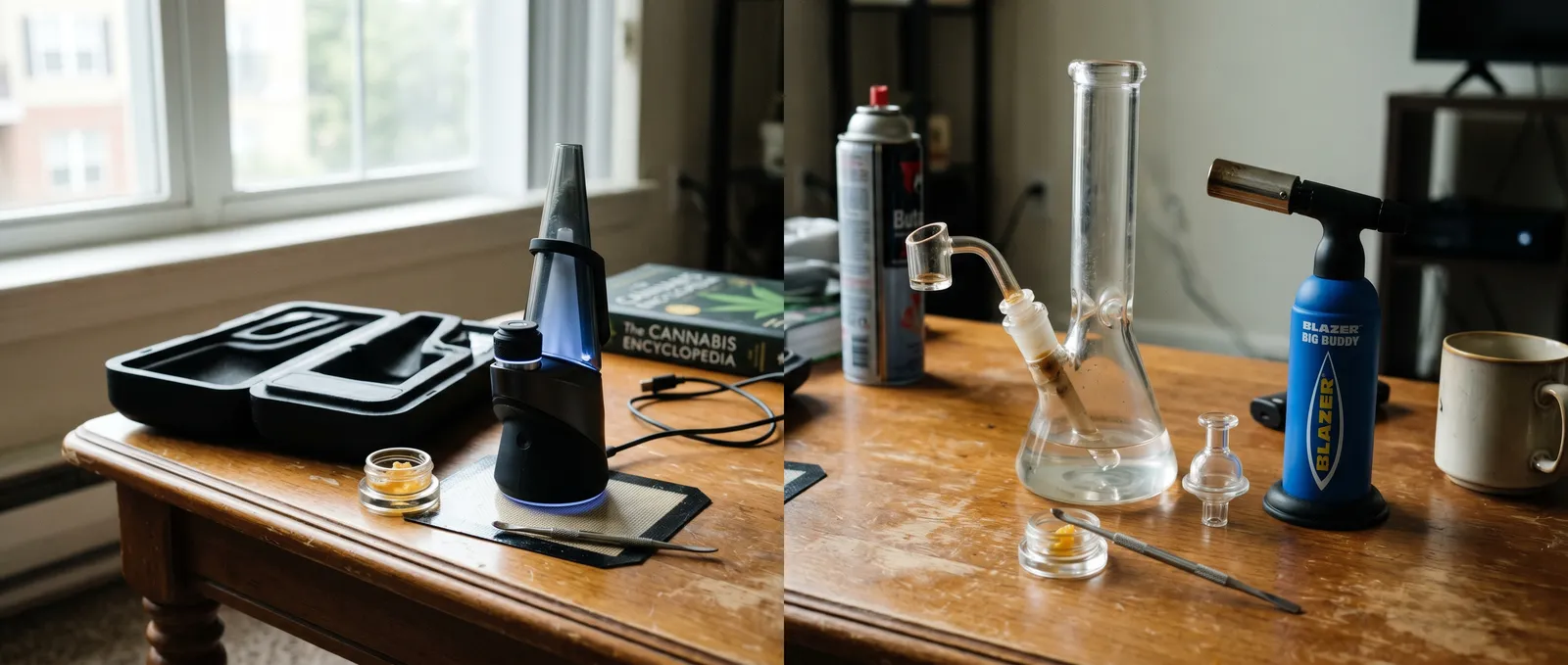
An e-rig is a battery-powered dab device with precise digital temperature control, eliminating the need for a torch and cool-down timer entirely. You set your preferred temperature and the device holds it there. They're pricier than a basic glass rig setup, but the consistency is hard to beat. Popular models in the Azarius catalogue include portable e-rigs that fit in a small bag — worth considering if you order concentrates regularly and want repeatable results.
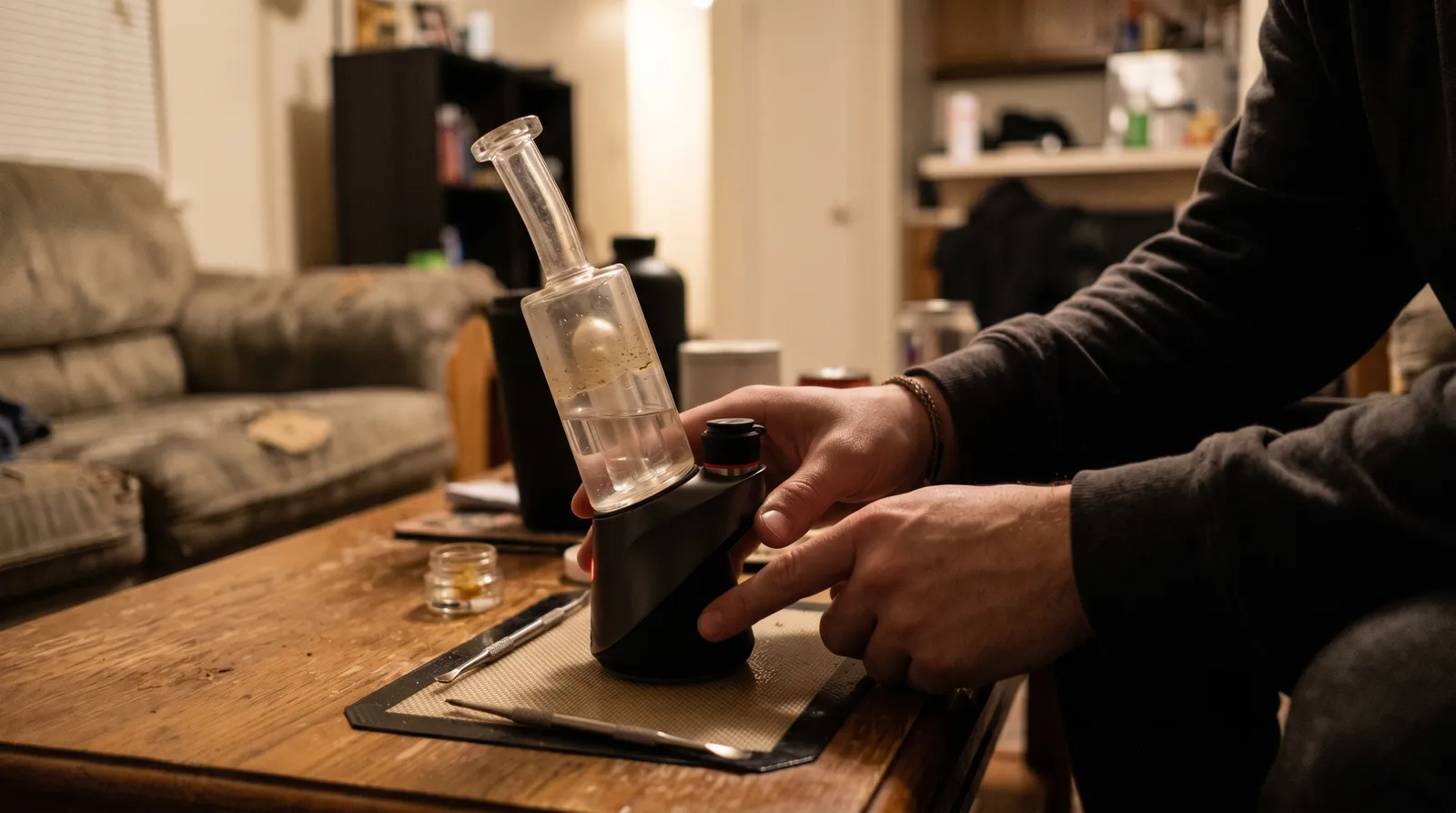
Dab pens are the most portable option: a concentrate chamber attached to a battery, small enough to fit in a pocket. They sacrifice some vapour quality and temperature precision compared to a full rig, but for on-the-go use they're hard to argue with. The data on vaporiser efficiency is still limited for concentrate-specific devices, though early comparisons suggest that temperature-controlled devices produce a cleaner vapour profile than unregulated torch methods (Meehan-Atrash et al., 2017).
We've had customers buy an e-rig after months of torch dabbing and tell us they wish they'd started there. We've also had e-rig owners order a glass rig because they missed the ritual. Neither is objectively better — it depends on whether you value precision or hands-on control. If budget allows, having both gives you options.
Dabbing for Beginners vs Smoking Flower: An Honest Comparison
Dabbing for beginners offers faster onset and richer terpene expression than smoking flower, but it is not without trade-offs. The upfront cost is higher — a rig, banger, torch, carb cap, and cleaning supplies add up compared to a simple pipe or rolling papers. The learning curve is steeper too: temperature control, cool-down timing, and dosing all require practice. And honestly, some people try dabbing and decide they prefer the simplicity of flower. That's a perfectly reasonable outcome. Concentrates suit people who want intensity and flavour precision; flower suits people who want a more relaxed, forgiving ritual. This guide is here to make sure that if you do choose dabbing, you have the right gear from day one.
The Complete Checklist
The table below lists every item a dabbing-for-beginners setup requires, along with whether it is essential or optional.
| Item | What It Does | Essential or Optional? |
|---|---|---|
| Dab rig (glass, mini, or percolator) | Water-filters and delivers vapour | Essential |
| Quartz banger (matching joint size) | Heated surface for vaporising concentrate | Essential |
| Dab torch (butane, refillable) | Heats the banger to working temperature | Essential (unless using an e-rig) |
| Dab tool (scoop, pick, or paddle) | Handles and portions the concentrate | Essential |
| Carb cap (directional or bubble) | Restricts airflow for lower-temp vaporisation | Essential |
| Terp pearls (quartz or ruby, 4–6 mm) | Distribute heat evenly inside the banger | Optional — recommended |
| Cleaning supplies (iso, cotton buds, salt) | Keeps the banger and rig in working order | Essential |
| Electric dab rig or dab pen | Replaces torch + banger with digital temp control | Optional alternative to torch setup |
Common Beginner Mistakes
The most frequent dabbing-for-beginners errors involve temperature, dosing, and maintenance — all avoidable with the right habits.
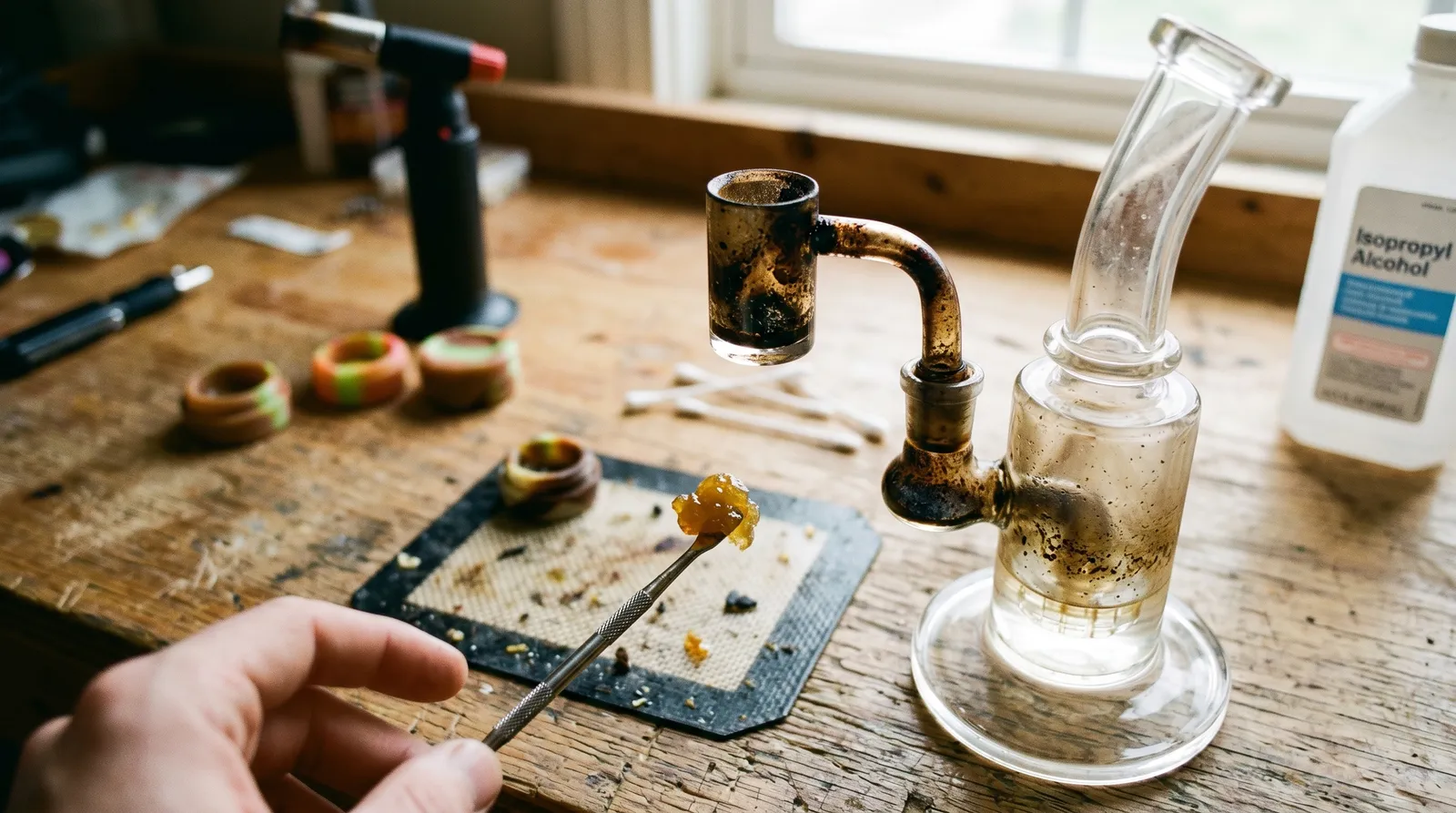
Overloading the banger. A rice-grain-sized dab is enough for your first session. You can always do a second dab — you can't undo a first one that was too large.
Dabbing too hot. If the vapour tastes harsh and makes you cough violently, the banger was too hot. Let it cool longer next time. Low-temp dabs taste better and are smoother on the lungs.
Skipping the carb cap. Without a cap, you lose a significant amount of concentrate to pooling. It's one of the cheapest accessories in the kit and makes the biggest difference to efficiency.
Not cleaning the banger after each use. Carbon buildup degrades flavour and eventually makes the quartz heat unevenly. A quick swab while warm takes five seconds and extends the banger's life considerably.
Mismatched joints. Double-check that your banger joint size and angle match your rig before buying. A 14.5 mm banger won't seat properly in an 18.8 mm joint without an adapter.
Joint-size mismatches are our single most common return reason for bangers. Measure your rig's joint with a ruler before you buy or order a banger — it takes ten seconds and saves a week of waiting for an exchange.
References
- Meehan-Atrash, J., Luo, W., & Strongin, R.M. (2015). Toxicant formation in dabbing: the terpene story. ACS Omega, 2(9), 6112–6117.
- Rabb, K., Engelman, R., & Strongin, R.M. (2020). Formation of toxic degradation products from dabbing at high temperatures. Chemical Research in Toxicology, 33(10), 2602–2607.
- Meehan-Atrash, J., Luo, W., & Strongin, R.M. (2017). Aerosol gas-phase components from cannabis e-cigarettes and dabbing. ACS Omega, 2(9), 6112–6117.
- EMCDDA (2023). European Drug Report: cannabis concentrates and evolving consumption methods. European Monitoring Centre for Drugs and Drug Addiction.
Last updated: April 2026
Domande frequenti
8 domandeCan I use a regular bong as a dab rig?
What temperature should I dab at?
How much concentrate should a beginner use per dab?
Do I need a carb cap or is it optional?
What is the difference between an e-rig and a traditional dab rig?
How often should I clean my quartz banger?
Is dabbing safer than smoking flower?
Why are dab rigs smaller than regular bongs?
Informazioni su questo articolo


Adam Parsons is an external cannabis and psychedelics writer and editor who contributes to Azarius's wiki as both author and reviewer. On the writing side, he authors Azarius's kratom and kanna clusters, drawing on exten
Questo articolo wiki è stato redatto con l’assistenza dell’IA e revisionato da Adam Parsons, External contributor. Supervisione editoriale di Joshua Askew.
Avviso medico. Questi contenuti hanno finalità esclusivamente informative e non costituiscono un parere medico. Consulta un operatore sanitario qualificato prima di utilizzare qualsiasi sostanza.
Ultima revisione 25 aprile 2026
Articoli correlati
Quartz Banger: Guida a Temperatura, Uso e Pulizia
Il quartz banger è un componente in biossido di silicio fuso utilizzato per vaporizzare concentrati nei dab rig.
Carb cap e terp pearls: guida completa al dabbing
Il carb cap restringe il flusso d'aria nel banger abbassando la pressione interna, così i concentrati vaporizzano a 230–290 °C anziché oltre 370 °C. Le terp…
Dab Pen vs Dab Rig: guida completa al confronto
Le dab pen e i dab rig sono dispositivi per il consumo di concentrati che riscaldano il materiale fino a produrre vapore, ma si differenziano per…
E-rig vs torcia e banger: confronto completo
L'hardware per il dabbing si divide in rig elettronici (e-rig) a temperatura controllata e setup tradizionali con torcia a butano e banger in quarzo.
Dabbing per principianti: guida completa al kit
Il dabbing consiste nel vaporizzare concentrati di cannabis su una superficie in quarzo riscaldata, inalando il vapore attraverso un piccolo rig con…